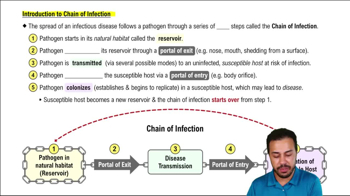
What are the five steps in the chain of infection?
The five steps are reservoir, portal of exit, transmission, portal of entry, and colonization of a susceptible host.
What is a reservoir in the chain of infection?
A reservoir is the natural habitat where a pathogen lives, which can be human or nonhuman.
How can containing a pathogen in its reservoir help prevent disease spread?
Containing the pathogen in its reservoir prevents it from leaving and infecting others, such as through quarantine.
What is the portal of exit in the chain of infection?
The portal of exit is the route by which a pathogen leaves its reservoir, like the nose or mouth during coughing or sneezing.
How can mask-wearing disrupt the chain of infection?
Mask-wearing covers the portal of exit, preventing pathogens from leaving the reservoir and spreading.
What is meant by transmission in the chain of infection?
Transmission is the process by which a pathogen is passed from the reservoir to a susceptible host, such as through airborne particles or contact with surfaces.
Give an example of airborne transmission in the chain of infection.
Airborne transmission can occur when a pathogen remains in the air after a sneeze and is inhaled by another person.
What is the portal of entry in the chain of infection?
The portal of entry is the body opening or orifice through which a pathogen enters a susceptible host, such as the mouth, nose, or an open wound.
Why is hygiene important in breaking the chain of infection?
Hygiene, like handwashing, removes pathogens from surfaces and skin, reducing the chance of transmission and entry into a new host.
What happens during colonization in the chain of infection?
During colonization, the pathogen establishes itself and begins to replicate in the susceptible host, which may or may not cause disease.
Can colonization always lead to disease?
No, colonization may or may not result in disease, but the host can still become a new reservoir.
How does a new reservoir perpetuate the chain of infection?
A new reservoir allows the chain of infection to start again, spreading the pathogen to more hosts.
What are some intervention points in the chain of infection?
Intervention points include containing the pathogen in its reservoir, blocking the portal of exit, preventing transmission, and maintaining hygiene.
Why is understanding disease transmission crucial for infection control?
Understanding transmission helps identify how pathogens spread and informs strategies to interrupt the chain of infection.
Which steps of the chain of infection are most focused on for public health strategies?
Public health strategies often focus on reservoirs, transmission, and colonization to control infectious disease spread.
 뒤로
뒤로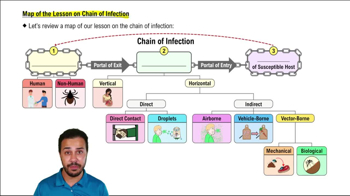
 00:46
00:46