Skip to main content
Microbiology
나의 코스
배우기
시험 준비
AI 튜터
학습 가이드
교과서적 해결책
플래시카드
탐험해 보세요
앱을 사용해 보세요
나의 코스
배우기
시험 준비
AI 튜터
학습 가이드
교과서적 해결책
플래시카드
탐험해 보세요
앱을 사용해 보세요
뒤로
Ionic Bonding quiz
카드를 뒤집기 위해 탭할 수 있습니다.
What is an ion?
카드를 뒤집기 위해 탭할 수 있습니다.
👆
What is an ion?
An ion is an atom or molecule with a net electrical charge due to the gain or loss of electrons.
진행 상황 추적
컨트롤 버튼이 '내비게이션' 모드로 변경되었습니다.
1/15
관련 플래시카드
관련 실천
추천 영상
Ionic Bonding definitions
Ionic Bonding
13 용어
Ionic Bonding
3. Chemical Principles of Microbiology
3 문제점
주제
Nicole
Hydrogen Bonding
3. Chemical Principles of Microbiology
3 문제점
주제
Brendan
3. Chemical Principles of Microbiology
7 주제
12 문제점
장
Nicole
04:34
Ionic Bonding
23417
views
400
rank
06:07
Ionic Bonds
20121
views
314
rank
1
comments
이 집합의 용어 (15)
하이드의 정의
What is an ion?
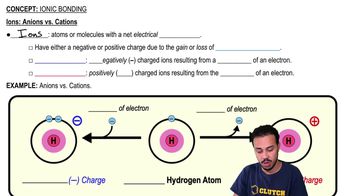
An ion is an atom or molecule with a net electrical charge due to the gain or loss of electrons.
How do anions form?
Anions form when an atom gains one or more negatively charged electrons, resulting in a net negative charge.
How do cations form?
Cations form when an atom loses one or more negatively charged electrons, resulting in a net positive charge.
What is the main difference between anions and cations?
Anions are negatively charged ions, while cations are positively charged ions.
What type of bond forms between cations and anions?
An ionic bond forms between cations and anions due to electrical attraction between their opposite charges.
Do ionic bonds involve sharing or transferring electrons?
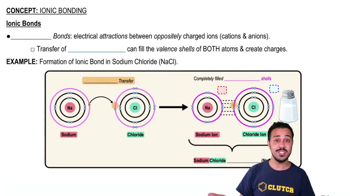
Ionic bonds involve a complete transfer of electrons, not sharing.
Why do atoms undergo ionic bonding?
Atoms undergo ionic bonding to achieve full valence shells, which increases their stability.
What happens to the valence shells of atoms involved in ionic bonding?
The valence shells of both atoms become full after the transfer of electrons in ionic bonding.
What is the charge of a sodium ion after it loses an electron?
After losing an electron, a sodium ion has a positive charge and is called a cation.
What is the charge of a chloride ion after it gains an electron?
After gaining an electron, a chloride ion has a negative charge and is called an anion.
What causes the attraction in an ionic bond?
The attraction in an ionic bond is caused by the opposite charges of the cation and anion.
What is a common example of an ionic compound?
Sodium chloride (NaCl), or table salt, is a common example of an ionic compound.
What happens to a neutral hydrogen atom if it gains an electron?
If a neutral hydrogen atom gains an electron, it becomes a negatively charged anion.
What happens to a neutral hydrogen atom if it loses its electron?
If a neutral hydrogen atom loses its electron, it becomes a positively charged cation.
Why does chlorine take an electron from sodium in the formation of NaCl?
Chlorine is much more electronegative than sodium, so it pulls the electron away, resulting in a complete transfer.
 뒤로뒤로
뒤로뒤로
 04:34
04:34