Skip to main content
Microbiology
나의 코스
배우기
시험 준비
AI 튜터
학습 가이드
교과서적 해결책
플래시카드
탐험해 보세요
앱을 사용해 보세요
나의 코스
배우기
시험 준비
AI 튜터
학습 가이드
교과서적 해결책
플래시카드
탐험해 보세요
앱을 사용해 보세요
뒤로
Reservoirs of Infection definitions
카드를 뒤집기 위해 탭할 수 있습니다.
Reservoir
카드를 뒤집기 위해 탭할 수 있습니다.
👆
Reservoir
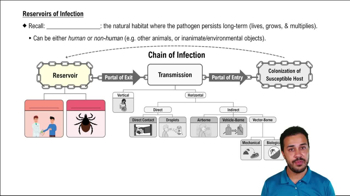
Natural habitat where a pathogen persists, allowing it to live, grow, and multiply over time.
진행 상황 추적
컨트롤 버튼이 '내비게이션' 모드로 변경되었습니다.
1/15
관련 플래시카드
관련 실천
추천 영상
Reservoirs of Infection quiz
Reservoirs of Infection
15 용어
Reservoirs of Infection
25. Epidemiology
3 문제점
주제
Disease Transmission
25. Epidemiology
2 문제점
주제
25. Epidemiology - Part 1 of 4
4 주제
9 문제점
장
25. Epidemiology - Part 2 of 4
4 주제
4 문제점
장
25. Epidemiology - Part 3 of 4
4 주제
8 문제점
장
25. Epidemiology - Part 4 of 4
2 주제
6 문제점
장
03:12
Human Reservoirs: Carriers of Disease
315
views
8
rank
00:51
Reservoirs of Infection
325
views
6
rank
02:36
Non-Human Reservoirs
287
views
7
rank
이 집합의 용어 (15)
하이드의 정의
Reservoir
Natural habitat where a pathogen persists, allowing it to live, grow, and multiply over time.
Pathogen
Microorganism capable of causing disease, often persisting in specific habitats before infecting hosts.
Human Reservoir
Person or group in which a pathogen lives and multiplies, serving as a source of infection for others.
Active Carrier
Infected individual who sheds pathogens, potentially with or without showing any signs or symptoms.
Asymptomatic Carrier
Infected person who transmits pathogens to others while showing no signs or symptoms themselves.
Passive Carrier
Uninfected individual who mechanically transfers pathogens, often via contaminated hands or clothing.
Nonhuman Reservoir
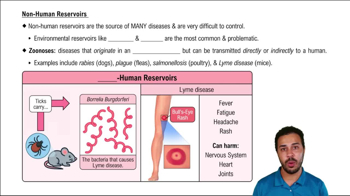
Animal, plant, or environmental source that supports long-term survival and multiplication of pathogens.
Environmental Reservoir
Nonliving habitat such as soil or water where pathogens can persist and serve as sources of infection.
Zoonosis
Disease primarily existing in animals but capable of being transmitted to humans, directly or indirectly.
Lyme Disease
Tick-borne infection caused by Borrelia burgdorferi, often presenting with a bullseye rash and multisystem effects.
Borrelia burgdorferi
Spirochete bacterium with a corkscrew shape, responsible for causing Lyme disease in humans.
Spirochete
Bacterium characterized by a spiral or corkscrew shape, aiding in movement through viscous environments.
Carrier
Organism capable of transmitting pathogens to others, with or without displaying disease symptoms.
Transmission
Process by which pathogens move from a reservoir or carrier to a susceptible host, initiating infection.
Zoonotic Disease
Infection originating in animals that can be transferred to humans, often involving complex transmission cycles.
 뒤로뒤로
뒤로뒤로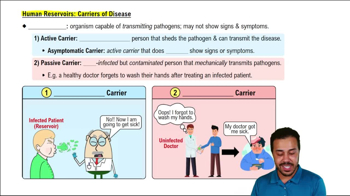
 03:12
03:12