Skip to main content
Microbiology
나의 코스
배우기
시험 준비
AI 튜터
학습 가이드
교과서적 해결책
플래시카드
탐험해 보세요
앱을 사용해 보세요
나의 코스
배우기
시험 준비
AI 튜터
학습 가이드
교과서적 해결책
플래시카드
탐험해 보세요
앱을 사용해 보세요
뒤로
Type I Hypersensitivities definitions
카드를 뒤집기 위해 탭할 수 있습니다.
Type I Hypersensitivity
카드를 뒤집기 위해 탭할 수 있습니다.
👆
Type I Hypersensitivity
A rapid immune overreaction to external antigens, mediated exclusively by IgE antibodies, often resulting in allergy symptoms within 30 minutes.
진행 상황 추적
컨트롤 버튼이 '내비게이션' 모드로 변경되었습니다.
1/15
관련 플래시카드
관련 실천
추천 영상
Type I Hypersensitivities quiz
Type I Hypersensitivities
15 용어
Type I Hypersensitivities
27. Immunological Disorders
4 문제점
주제
Type II Hypersensitivities
27. Immunological Disorders
4 문제점
주제
27. Immunological Disorders - Part 1 of 2
4 주제
11 문제점
장
27. Immunological Disorders - Part 2 of 2
4 주제
6 문제점
장
04:31
Diagnosing & Treating Allergies
178
views
3
rank
02:23
Type I Hypersensitivities Example 3
128
views
3
rank
01:52
Type I Hypersensitivities Example 2
143
views
3
rank
이 집합의 용어 (15)
하이드의 정의
Type I Hypersensitivity
A rapid immune overreaction to external antigens, mediated exclusively by IgE antibodies, often resulting in allergy symptoms within 30 minutes.
IgE Antibody
An immunoglobulin specialized in defending against parasites and venoms, but central to triggering allergic reactions in modern environments.
Allergen
An external antigen, often harmless, that provokes immune sensitization and subsequent allergic responses upon re-exposure.
Mast Cell
A tissue-resident immune cell that, when coated with IgE, releases inflammatory mediators like histamine during allergic reactions.
Basophil
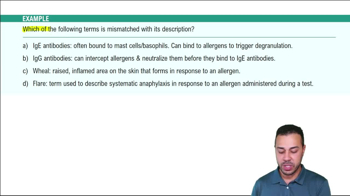
A circulating white blood cell that, upon IgE binding, releases granules containing substances that drive allergic symptoms.
Degranulation
The process where mast cells or basophils release stored inflammatory chemicals, such as histamine, into surrounding tissues.
Histamine
A potent mediator released during allergic reactions, responsible for symptoms like itching, swelling, and increased mucus production.
Localized Allergic Reaction
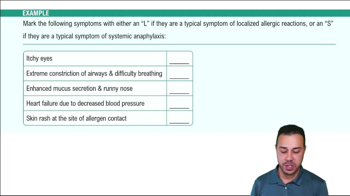
A mild immune response confined to the site of allergen exposure, causing symptoms like rash, sneezing, or itchy eyes.
Systemic Anaphylaxis
A severe, body-wide allergic reaction that can cause life-threatening drops in blood pressure and airway obstruction.
Anaphylactic Shock
A critical condition marked by dangerously low blood pressure and organ failure due to widespread mediator release.
Prick Puncture Skin Test
A diagnostic method where allergens are introduced under the skin to observe rapid wheal and flare reactions indicating sensitivity.
Immunotherapy
A treatment involving gradual allergen exposure to retrain the immune system, aiming to reduce allergic response severity.
Desensitization
A process of repeated, controlled allergen exposure intended to shift antibody production and lessen allergic reactions.
IgG Antibody
A common immunoglobulin that, when produced during immunotherapy, can intercept allergens before they trigger IgE-mediated responses.
Hygiene Hypothesis
A theory suggesting that reduced early-life exposure to microbes may increase susceptibility to allergic diseases.
 뒤로뒤로
뒤로뒤로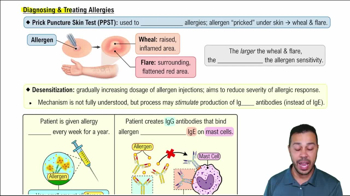
 04:31
04:31