 뒤로
뒤로Microbial Growth Conditions: Temperature, pH, and Salt Adaptations
 04:16
04:16
이 집합의 용어 (16)
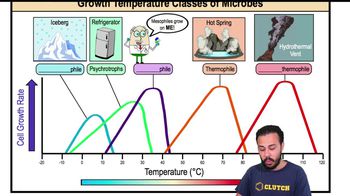
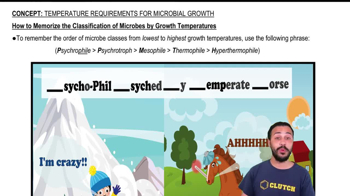
Psychrophiles are microbes that thrive at very low temperatures, typically between -20°C and 10°C. They are adapted to cold environments like polar regions.
Psychrotrophs grow well at low temperatures but have a broader range, typically 0°C to 30°C. They can spoil refrigerated foods.
Mesophiles grow best at moderate temperatures, usually between 20°C and 45°C. Most human pathogens are mesophiles.
Thermophiles thrive at high temperatures, typically 45°C to 80°C, found in hot springs and compost heaps.
Extreme thermophiles grow optimally above 80°C, often in environments like hydrothermal vents.
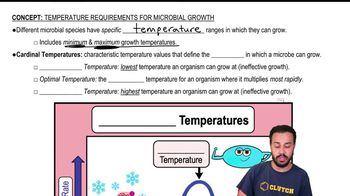
Low temperatures slow enzyme activity and membrane fluidity, reducing microbial growth and metabolism.
High temperatures can denature proteins and disrupt membranes, leading to cell death if beyond tolerance.
Enzyme stability, membrane composition, and protein structure determine the temperature range a microbe can survive.
Acidophiles grow best at acidic pH, usually below pH 5, such as Ferroplasma species.
Alkaliphiles thrive in basic environments, typically pH 9 or above, like some Bacillus species.
Neutralophiles prefer neutral pH around 6.5 to 7.5, including most human-associated microbes.
They use mechanisms like proton pumps, buffering compounds, and specialized enzymes to maintain internal pH.
Halophiles are microbes that require high salt concentrations to grow, often found in salt lakes and saline soils.
They accumulate compatible solutes or ions internally to balance osmotic pressure and prevent dehydration.
Halophiles require high salt to grow, while facultative halophiles tolerate but do not require high salt.
High salt causes osmotic stress, leading to water loss and cell plasmolysis, which most microbes cannot tolerate.