 뒤로
뒤로Microbiology Fundamentals Flashcards
 02:13
02:13
이 집합의 용어 (25)
Life is characterized by organization and metabolism. Organization refers to structured complexity, and metabolism involves chemical reactions sustaining life.
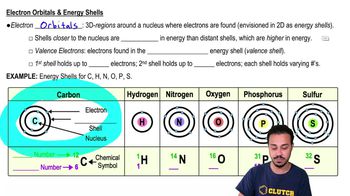
An atom is the smallest unit of an element. A molecule is two or more atoms bonded together. A compound is a molecule made of different elements.
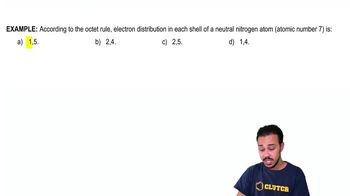
Protons: positive charge, nucleus; Neutrons: no charge, nucleus; Electrons: negative charge, electron cloud.
1. Synthesis, 2. Decomposition, 3. Single Replacement, 4. Double Replacement, 5. Combustion, 6. Acid-Base reactions.
An atom forms an ion by gaining or losing electrons, resulting in a charged particle.
Ionic compounds can be binary (two elements), polyatomic (contain polyatomic ions), or hydrated (contain water molecules).
pH 2.5 and 6 are acidic, pH 8, 11, and 14 are basic, and pH 7 is neutral.
A buffer stabilizes pH by neutralizing added acids or bases, maintaining homeostasis in biological systems.
A chemical bond is a force holding atoms together. Types include ionic, covalent, and hydrogen bonds.
An isotope has the same protons but different neutrons. It forms due to neutron variation and can be detected by mass spectrometry.
A monomer is a single unit; a polymer is many monomers linked together.
Formula: \((CH_2O)_n\). Functions: energy source, energy storage, and structural support.
Types include fats, phospholipids, and sterols.
Fats have glycerol and three fatty acids; they store energy and provide insulation.
Phospholipids have two fatty acids and a phosphate group; they form cell membranes.
Sterols have a four-ring structure; they regulate membrane fluidity and act as hormones.
Monomers are amino acids with an amino group (-NH2) and a carboxyl group (-COOH).
DNA stores genetic information; RNA helps in protein synthesis.
Cell Theory states all living things are made of cells, cells are the basic unit of life, and all cells come from preexisting cells.
Compound Microscope, Scanning Electron Microscope (SEM), Transmission Electron Microscope (TEM).
Use a Compound Microscope to observe an amoeba.
Use a Compound Microscope to observe blood cells.
Use a Transmission Electron Microscope (TEM) to observe the flu virus.
Use a Transmission Electron Microscope (TEM) to observe an amino acid.
Use a Transmission Electron Microscope (TEM) to observe DNA.