Skip to main content
Microbiology
나의 코스
배우기
시험 준비
AI 튜터
학습 가이드
교과서적 해결책
플래시카드
탐험해 보세요
앱을 사용해 보세요
나의 코스
배우기
시험 준비
AI 튜터
학습 가이드
교과서적 해결책
플래시카드
탐험해 보세요
앱을 사용해 보세요
뒤로
Microbiology Growth, Culture, and Antimicrobial Control
카드를 뒤집기 위해 탭할 수 있습니다.
Psychrophiles
카드를 뒤집기 위해 탭할 수 있습니다.
👆
Psychrophiles
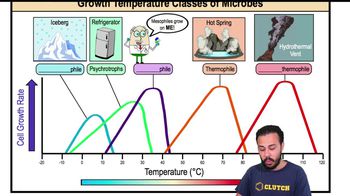
Microbes that grow at temperatures below 15°C with an optimum near 0°C; found in deep oceans and polar regions.
진행 상황 추적
컨트롤 버튼이 '내비게이션' 모드로 변경되었습니다.
1/31
추천 영상
04:16
Temperature Requirements for Microbial Growth
3368
views
45
rank
04:56
Classification of Microbes by Growth Temperature
3150
views
38
rank
01:59
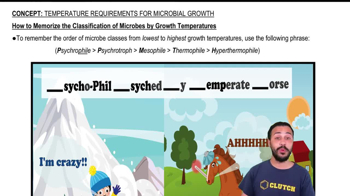
How to Memorize the Classification of Microbes by Growth Temperatures
2785
views
31
rank
이 집합의 용어 (31)
하이드의 정의
Psychrophiles
Microbes that grow at temperatures below 15°C with an optimum near 0°C; found in deep oceans and polar regions.
Mesophiles
Microbes with optimum growth between 20°C and 40°C; commonly found in animal microbiota and pathogens.
Cardinal temperatures
The minimum, optimum, and maximum temperatures at which a microbial species can grow.
pH preference of most bacteria
Most bacteria grow best at near-neutral pH, typically around pH 7.
Obligate halophiles
Microbes that require high salt concentrations for growth.
Chemoheterotrophs vs Autotrophs (carbon source)
Chemoheterotrophs use organic compounds for carbon, whereas autotrophs use carbon dioxide.
Oxygen requirement: Obligate aerobes
Require oxygen for growth and perform aerobic respiration only.
Oxygen requirement: Facultative anaerobes
Can grow with or without oxygen; use fermentation or anaerobic respiration when oxygen is absent.
Toxic oxygen forms
Reactive oxygen species including singlet oxygen, superoxide radical, peroxide, and hydroxyl radical that can damage cells.
Catalase test purpose
Detects presence of catalase enzyme by breaking down hydrogen peroxide into water and oxygen.
Culture medium
A nutrient preparation used to support microbial growth.
Selective media
Contain inhibitors to suppress unwanted microbes and favor growth of desired organisms.
Differential media
Distinguish organisms by visible differences in growth or biochemical reactions.
Reducing media
Support growth of anaerobes by chemically removing oxygen.
Biosafety Level 3 (BSL-3)
Containment level for highly infectious airborne pathogens; includes biosafety cabinets and negative pressure rooms.
Pure culture
A culture containing only one species or strain of microorganism.
Binary fission
A bacterial cell division process involving elongation, DNA replication, septum formation, and separation into two cells.
Sterilization
The process that removes or destroys all microbial life, including endospores.
Autoclave standard conditions
Sterilization at 15 psi pressure and 121°C temperature for 15 minutes.
Pasteurization
Heat treatment that reduces pathogens and spoilage organisms without complete sterilization.
Filtration for sterilization
Removes microbes from heat-sensitive fluids and air using membrane or HEPA filters.
Disk-diffusion method
A test where antibiotic-soaked disks are placed on inoculated agar to evaluate antimicrobial effectiveness by zones of inhibition.
Phenol and phenolics
Chemical agents that injure plasma membrane lipids and remain active in the presence of organic matter.
Selective toxicity
The property of a drug to harm microbes more than host cells.
Bactericidal vs Bacteriostatic
Bactericidal agents kill microbes; bacteriostatic agents inhibit microbial growth without killing.
Penicillin mechanism of action
Blocks peptidoglycan cross-linking, disrupting bacterial cell wall synthesis.
Aminoglycosides target
Bind to the 30S ribosomal subunit, causing misreading of mRNA and inhibiting protein synthesis.
Quinolones mechanism
Inhibit DNA gyrase or topoisomerases, blocking nucleic acid synthesis.
Sulfonamides mode of action
Compete with PABA to inhibit folic acid synthesis, an essential metabolite.
Antifungal drug target
Many antifungals disrupt ergosterol synthesis or function, increasing membrane permeability.
Superinfection
Overgrowth of resistant normal microbiota during antimicrobial treatment, e.g., Candida albicans or Clostridioides difficile.
 뒤로뒤로
뒤로뒤로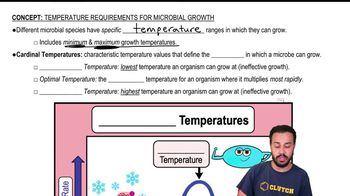
 04:16
04:16