 뒤로
뒤로Microbiology: Host-Microbe Interactions, Immunity, and Epidemiology
 05:59
05:59
이 집합의 용어 (28)
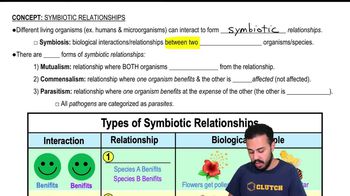
Both organisms benefit. Example: E. coli in the intestine produce vitamin K.
One organism benefits while the other is unaffected. Example: Normal skin bacteria feeding on dead skin cells.
One organism benefits while the host is harmed. Example: Disease-causing bacteria living in humans.
Colonization: Microorganisms grow on/in body without causing disease.
Infection: Invasion and multiplication of pathogens causing disease.
Incubation (no symptoms), Prodromal (mild symptoms), Illness (severe symptoms), Decline (symptoms decrease), Convalescence (recovery).
Localized: Confined to one area (e.g., boil).
Systemic: Spreads throughout body (e.g., sepsis).
To determine if a specific microorganism causes a specific disease.
- Organism found in every diseased host.
- Isolated and grown in pure culture.
- Causes disease in healthy host.
- Recovered from newly infected host.
Exotoxins: Proteins secreted by mostly Gram-positive bacteria, highly potent and specific.
Endotoxins: Lipopolysaccharides from Gram-negative bacteria outer membrane, less specific.
Neurotoxins (botulinum, tetanus), Enterotoxins (cholera), Cytotoxins (hemolysins), Superantigens (toxic shock syndrome).
Physical barriers: Skin, mucous membranes.
Chemical barriers: Sebum, lysozyme, gastric juice.
Normal microbiota compete with pathogens.
- Chemotaxis
- Adherence
- Ingestion
- Digestion
Pain, Redness, Immobility (loss of function), Swelling, Heat.
Released by virus-infected cells to warn neighbors, slow viral replication, and activate NK cells.
Opsonization, Inflammation, Cell lysis via Membrane Attack Complex (MAC).
Specific to antigen, slower first response, has immunological memory for faster future responses.
Humoral: B cells produce antibodies against extracellular pathogens.
Cell-Mediated: T cells kill infected cells and activate immunity against intracellular pathogens.
Y-shaped protein with 2 heavy chains, 2 light chains, variable region binds antigen, constant region determines antibody class.
IgG: Most abundant, crosses placenta, long-term immunity.
IgM: First antibody produced, pentamer, activates complement.
Antigen binds specific B or T cell → selected cell divides → produces effector and memory cells.
MHC I: On all nucleated cells, presents to CD8 (cytotoxic) T cells.
MHC II: On antigen-presenting cells, presents to CD4 (helper) T cells.
Live attenuated, Inactivated, Subunit, Toxoid, Recombinant, DNA, mRNA vaccines.
When enough people are immune, disease transmission is greatly reduced, protecting vulnerable individuals.
Direct ELISA: Detects antigen.
Indirect ELISA: Detects antibodies in patient serum.
Hospital-acquired infection caused by factors like catheters, surgery, weakened immunity, poor hygiene.
Cytokines are chemical messengers that coordinate immune cell growth, activation, and inflammation.
Innate immune cells that kill virus-infected and tumor cells without prior exposure or antigen presentation.
Communicable: Spread person to person.
Noncommunicable: Cannot spread between people.