 뒤로
뒤로Microbiology Unit 3 Study Guide Flashcards
 02:16
02:16
이 집합의 용어 (30)
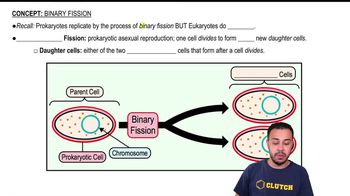
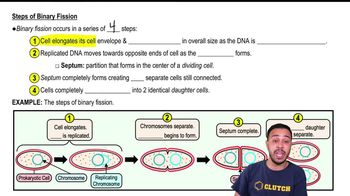
Binary fission is an asexual reproduction process where a bacterial cell divides into two identical daughter cells. It differs from budding, which produces a smaller daughter cell from the parent.
Some bacteria, like Bacillus and Clostridium, use spores for asexual reproduction to survive harsh conditions.
1. Lag phase: adaptation, no division
2. Log phase: exponential growth
3. Stationary phase: growth rate = death rate
4. Death phase: decline in viable cells
Natural environments are dynamic with nutrient fluctuations and competition, so the classic four-stage growth curve often does not fully develop.
Psychrophiles thrive at very low temperatures, typically below 15°C, e.g., Arctic bacteria.
Psychrotrophs grow at low temperatures but have optimal growth between 20-30°C, e.g., food spoilage bacteria.
Mesophiles grow best at moderate temperatures, 20-45°C, including many human pathogens.
Thermophiles prefer high temperatures, 45-80°C, found in hot springs.
Extreme thermophiles grow above 80°C, often in hydrothermal vents.
Low temperatures slow metabolism and growth; high temperatures can denature proteins and kill cells.
Enzyme stability and membrane fluidity determine minimum, maximum, and optimal growth temperatures.
Acidophiles grow optimally at pH below 5, e.g., Ferroplasma.
Alkaliphiles thrive at pH above 9, e.g., some Bacillus species.
Neutralophiles prefer pH 6-8, including most human pathogens.
Microbes regulate internal pH via proton pumps, buffering systems, and membrane adaptations.
Halophiles live in high salt environments and combat osmotic stress by accumulating compatible solutes or ions.
Halophiles require high salt to grow; facultative halophiles tolerate but do not require high salt.
High salt causes osmotic dehydration and enzyme inhibition, preventing growth of most microbes.
Aerobes require oxygen; anaerobes do not use oxygen and may be harmed by it; facultative anaerobes can grow with or without oxygen.
Aerobes: obligate and microaerophiles; Anaerobes: obligate and aerotolerant.
ROS are toxic oxygen derivatives that damage cells; microbes produce enzymes like catalase to neutralize ROS.
Decontamination removes contaminants; sterilization kills all microbes; disinfection reduces pathogens but may not kill spores.
Uses steam under pressure to sterilize by denaturing proteins and destroying microbes and spores.
Heats liquids to reduce microbial load without sterilization, preserving flavor and nutrients.
Low-level kill most vegetative cells; intermediate kill mycobacteria and viruses; high-level kill spores and all microbes.
Competitive inhibitors bind active site; non-competitive bind elsewhere causing shape change; allosteric inhibitors regulate enzyme activity.
Breaks glucose into pyruvate, producing 2 ATP and 2 NADH; occurs in cytoplasm.
Oxidizes acetyl-CoA to CO2, producing NADH, FADH2, and ATP; occurs in mitochondrial matrix or cytoplasm in prokaryotes.
Transfers electrons to oxygen, creating a proton gradient to produce ATP via oxidative phosphorylation.
Fermentation produces less ATP than respiration, typically 2 ATP per glucose molecule.