Ch. 9 - Controlling Microbial Growth in the Environment
Bauman - Microbiology with Diseases by Taxonomy 6th Edition
Bauman6th EditionMicrobiology with Diseases by TaxonomyISBN: 9780134832302당신이 사용하는 게 아니라요?교과서 변경
9장, 문제 3

Which of the following terms best describes the disinfecting of cafeteria plates?
a. Pasteurization
b. Antisepsis
c. Sterilization
d. Sanitization

검증된 단계별 안내
1
Step 1: Understand the definitions of each term to identify which best fits the context of disinfecting cafeteria plates.
Step 2: Pasteurization is a process that uses mild heat to reduce the number of pathogens in liquids like milk, but it is not typically used for solid objects like plates.
Step 3: Antisepsis refers to the use of chemical agents on living tissues (like skin) to reduce or eliminate microbes, so it is not appropriate for inanimate objects such as plates.
Step 4: Sterilization is the complete elimination or destruction of all forms of microbial life, including spores, which is often more rigorous than necessary for cafeteria plates.
Step 5: Sanitization is the process of reducing microbial populations on inanimate objects to safe public health levels, which is the typical goal when disinfecting cafeteria plates.

비슷한 문제에 대한 검증된 영상 답변:

이 영상 해법은 위 문제에 도움이 된다고 튜터들이 추천한 것입니다.
영상 길이:
2m

주요 개념

질문에 올바르게 답하기 위해 반드시 이해해야 하는 핵심 개념들은 다음과 같습니다.

Pasteurization

Pasteurization is a heat treatment process that reduces microbial load in liquids like milk and juice to safe levels, but it does not eliminate all microorganisms. It is not typically used for disinfecting solid objects like plates.
추천 영상:
03:50
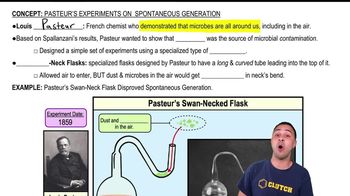
Pasteur's Experiments on Spontaneous Generation

Antisepsis

Antisepsis refers to the use of chemical agents to destroy or inhibit microorganisms on living tissues, such as skin or mucous membranes. It is not appropriate for inanimate objects like cafeteria plates.

Sanitization

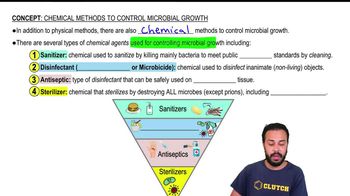
Sanitization is the process of reducing microbial populations on inanimate objects to safe public health levels, often used for cleaning dishes, utensils, and surfaces. It lowers the risk of disease transmission without necessarily achieving complete sterility.
추천 영상:
03:58
Chemical Methods to Control Microbial Growth