Ch. 10 - Host Microbe Interactions and Pathogenesis
Norman-McKay- Microbiology: Basic and Clinical Principles 2nd Edition
Norman-McKay2nd EditionMicrobiology: Basic and Clinical PrinciplesISBN: 9780137661619당신이 사용하는 게 아니라요?교과서 변경
6장, 문제 20

Place the following steps for infection in order from first to last:
  • Invade tissues and obtain nutrients
  • Adhere to host tissues
  • Enter the host
  • Exit the host
  • Evade immune defenses

검증된 단계별 안내
1
Step 1: Identify the initial point of infection, which is when the microorganism gains access to the host. This corresponds to 'Enter the host'.
Step 2: Once inside, the microorganism must attach itself to the host cells to establish infection. This is 'Adhere to host tissues'.
Step 3: After adherence, the microorganism invades host tissues and obtains nutrients necessary for survival and multiplication. This step is 'Invade tissues and obtain nutrients'.
Step 4: To maintain infection, the microorganism must avoid being destroyed by the host's immune system. This is 'Evade immune defenses'.
Step 5: Finally, to spread the infection to new hosts, the microorganism must leave the current host. This is 'Exit the host'.

비슷한 문제에 대한 검증된 영상 답변:

이 영상 해법은 위 문제에 도움이 된다고 튜터들이 추천한 것입니다.
영상 길이:
4m
도움이 되었나요?

주요 개념

질문에 올바르게 답하기 위해 반드시 이해해야 하는 핵심 개념들은 다음과 같습니다.

Stages of Microbial Infection

Infection progresses through distinct stages: entry into the host, adherence to host tissues, invasion and nutrient acquisition, evasion of immune defenses, and finally exit to spread. Understanding this sequence helps clarify how pathogens establish and maintain infection.
추천 영상:
가이드 코스
03:16
Stages of Photosynthesis

Adherence Mechanisms

Adherence is the process by which microbes attach to host cells using structures like pili or adhesins. This step is crucial for colonization and prevents pathogens from being washed away, enabling subsequent invasion and infection.
추천 영상:
가이드 코스
01:59
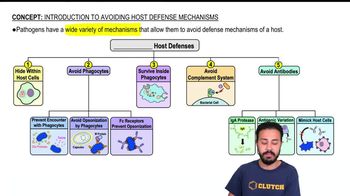
Introduction to Avoiding Host Defense Mechanisms

Immune Evasion Strategies

Pathogens employ various tactics to evade the host immune system, such as producing capsules, altering surface antigens, or secreting immune-modulating factors. This allows them to survive, multiply, and cause disease within the host.
추천 영상:
가이드 코스
03:19
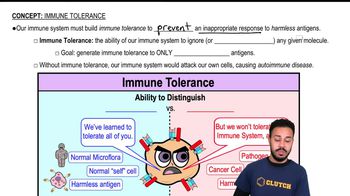
Immune Tolerance