Ch. 15 - Antimicrobial Drugs
Norman-McKay- Microbiology: Basic and Clinical Principles 2nd Edition
Norman-McKay2nd EditionMicrobiology: Basic and Clinical PrinciplesISBN: 9780137661619당신이 사용하는 게 아니라요?교과서 변경
11장, 문제 12

If a gene encoding a bacterial transpeptidase enzyme undergoes mutation, which of the following antimicrobials may no longer be effective against the mutated bacterium?
a. Macrolides
b. Polypeptide drugs
c. Tetracyclines
d. Penicillins
e. Quinolones

검증된 단계별 안내
1
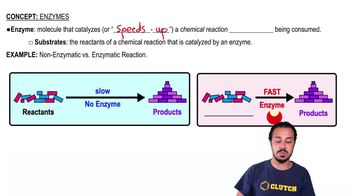
Step 1: Understand the role of the bacterial transpeptidase enzyme. This enzyme is crucial for bacterial cell wall synthesis because it catalyzes the cross-linking of peptidoglycan chains, which provides structural integrity to the bacterial cell wall.
Step 2: Identify which class of antimicrobials targets the transpeptidase enzyme. Beta-lactam antibiotics, such as penicillins, inhibit transpeptidase by binding to its active site, preventing cell wall cross-linking and leading to bacterial cell death.
Step 3: Recognize that a mutation in the gene encoding transpeptidase can alter the enzyme's structure, potentially reducing the binding affinity of beta-lactam antibiotics and rendering them less effective or ineffective.
Step 4: Review the other antimicrobial classes listed: macrolides inhibit protein synthesis by binding to the 50S ribosomal subunit; polypeptide drugs disrupt cell membrane integrity; tetracyclines inhibit protein synthesis by binding to the 30S ribosomal subunit; quinolones inhibit DNA gyrase and topoisomerase IV involved in DNA replication. None of these directly target transpeptidase.
Step 5: Conclude that the antimicrobial class most likely to be ineffective due to mutation in the transpeptidase gene is penicillins, as their mechanism of action depends on binding to this enzyme.

비슷한 문제에 대한 검증된 영상 답변:

이 영상 해법은 위 문제에 도움이 된다고 튜터들이 추천한 것입니다.
영상 길이:
2m
도움이 되었나요?

주요 개념

질문에 올바르게 답하기 위해 반드시 이해해야 하는 핵심 개념들은 다음과 같습니다.

Bacterial Transpeptidase Enzyme

Transpeptidase enzymes, also known as penicillin-binding proteins (PBPs), are crucial for bacterial cell wall synthesis. They catalyze the cross-linking of peptidoglycan chains, providing structural integrity. Mutations in these enzymes can alter their binding sites, affecting the action of certain antibiotics.
추천 영상:

Mechanism of Action of Penicillins

Penicillins target bacterial transpeptidase enzymes by binding to their active sites, inhibiting cell wall synthesis and causing bacterial death. If the transpeptidase is mutated, penicillins may no longer bind effectively, leading to antibiotic resistance.
추천 영상:
가이드 코스
01:59
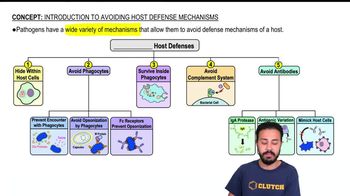
Introduction to Avoiding Host Defense Mechanisms

Antibiotic Classes and Their Targets

Different antibiotics target distinct bacterial structures or functions: macrolides inhibit protein synthesis by binding the 50S ribosomal subunit; tetracyclines block the 30S subunit; polypeptide drugs disrupt cell membranes; quinolones inhibit DNA gyrase. Only penicillins directly target transpeptidase enzymes.
추천 영상:
가이드 코스
04:43
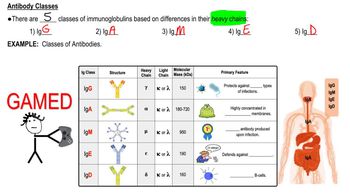
Classes of Antibodies
관련 실천
교과서 질문

Which of the following antimicrobial properties would be the most crucial to consider in developing a new antimicrobial?

a. Selective toxicity

b. Ease of administration

c. Lack of drug interactions

d. Long half-life

e. The drug’s capacity to be bactericidal

736
views
교과서 질문

Assume a bacterium makes beta-lactamase. Could you still use a glycopeptide drug to treat an infection caused by this bacterium? Explain your reasoning.

725
views
교과서 질문

Mark the following as true or false, and then correct the false statements so they are true.

a. Human cells make drug efflux pumps.

b. The minimum bactericidal concentration is the minimum concentration of the drug that kills at least 50 percent of the bacteria present.

c. The E-test can reveal if a drug is bactericidal or bacteriostatic.

d. A drug that is bactericidal at one dose may be bacteriostatic at another dose.

e. The antifolate combination therapy trimethoprim-sulfamethoxazole may be used to treat protozoan infections.

766
views
교과서 질문

Acquired antibiotic resistance can include all of the following except:

a. Altering an enzyme that a given drug may target

b. Making endospores

c. Altering a point of entry for a drug

d. Making enzymes that inactivate a drug

e. Increasing the number of efflux pumps that are active in a cell

1401
views
교과서 질문

Why is it challenging to obtain selectively toxic drugs against fungi, protozoans, and viruses?

885
views
교과서 질문

Assume a clinical sample yields a strain of S. aureus containing a plasmid that encodes two antimicrobial-resistance genes. How did the bacterium most likely acquire these new resistance genes?

a. The strain was intrinsically resistant.

b. The strain obtained the genes through horizontal gene transfer.

c. The strain acquired the genes by a random mutation.

d. The strain picked up the genes by an efflux pump.

e. The strain acquired the genes through cell division events.

1392
views