Ch. 19 - Digestive System Infections
Norman-McKay- Microbiology: Basic and Clinical Principles 2nd Edition
Norman-McKay2nd EditionMicrobiology: Basic and Clinical PrinciplesISBN: 9780137661619당신이 사용하는 게 아니라요?교과서 변경
15장, 문제 6

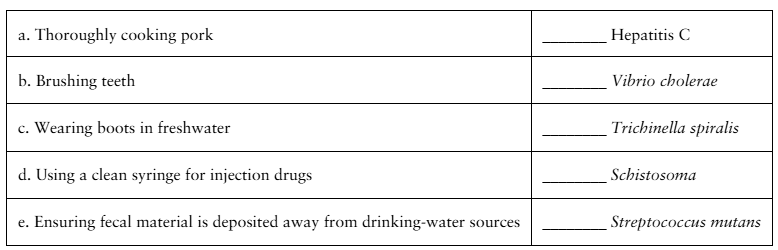
Match the preventative measure to the infectious agent it can help limit:
Matching preventative measures like cooking pork and brushing teeth to specific infectious agents in a table format.

검증된 단계별 안내
1
Step 1: Understand the mode of transmission or infection route for each infectious agent listed. For example, Trichinella spiralis is a parasitic worm commonly transmitted through undercooked pork, so cooking pork thoroughly helps prevent this infection.
Step 2: Match 'Thoroughly cooking pork' with the infectious agent that is transmitted via undercooked pork, which is Trichinella spiralis.
Step 3: Consider the role of oral hygiene in preventing infections. Brushing teeth helps reduce bacteria in the mouth, particularly Streptococcus mutans, which is involved in dental caries.
Step 4: Identify the infectious agents associated with waterborne transmission or contact with contaminated water. Wearing boots in freshwater helps prevent infections by Schistosoma, a parasite that penetrates the skin in contaminated water.
Step 5: Recognize that using a clean syringe prevents bloodborne infections such as Hepatitis C, and ensuring fecal material is kept away from drinking water prevents waterborne diseases like Vibrio cholerae, which causes cholera.

비슷한 문제에 대한 검증된 영상 답변:

이 영상 해법은 위 문제에 도움이 된다고 튜터들이 추천한 것입니다.
영상 길이:
2m
도움이 되었나요?

주요 개념

질문에 올바르게 답하기 위해 반드시 이해해야 하는 핵심 개념들은 다음과 같습니다.

Transmission Routes of Infectious Agents

Understanding how infectious agents spread is crucial for matching preventative measures. Some pathogens transmit through contaminated food or water, others via direct contact or vectors. Identifying the transmission route helps in selecting effective prevention strategies, such as cooking food to kill parasites or avoiding contaminated water.
추천 영상:
02:54
Acellular Infectious Agents: Viruses, Viroids & Prions

Preventative Measures Against Specific Pathogens

Different infectious agents require targeted prevention methods. For example, thorough cooking kills parasites like Trichinella spiralis, while brushing teeth reduces bacteria like Streptococcus mutans. Using clean syringes prevents bloodborne infections, and sanitation practices limit waterborne diseases like cholera.
추천 영상:
03:48
Pathogens Use Fc Receptors to Prevent Opsonization

Relationship Between Infectious Agents and Their Hosts or Environments

Many pathogens have specific environmental niches or hosts. Schistosoma species require freshwater snails and infect humans through skin contact with contaminated water, so wearing boots can prevent infection. Recognizing these relationships aids in understanding why certain preventative actions are effective.
추천 영상:
02:54
Acellular Infectious Agents: Viruses, Viroids & Prions