Ch. 5 - Genetics
Norman-McKay- Microbiology: Basic and Clinical Principles 2nd Edition
Norman-McKay2nd EditionMicrobiology: Basic and Clinical PrinciplesISBN: 9780137661619당신이 사용하는 게 아니라요?교과서 변경
5장, 문제 1

List three features of the genetic code.

검증된 단계별 안내
1
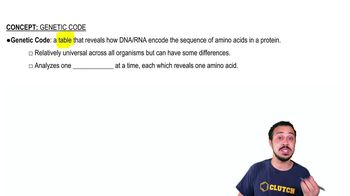
Understand that the genetic code is the set of rules by which information encoded in genetic material (DNA or RNA sequences) is translated into proteins by living cells.
Identify that one key feature is that the genetic code is 'triplet' or 'codon-based,' meaning that each amino acid is encoded by a sequence of three nucleotides called a codon.
Recognize that the genetic code is 'degenerate,' which means that most amino acids are encoded by more than one codon, providing redundancy.
Note that the genetic code is 'universal,' meaning that nearly all organisms use the same codon assignments for amino acids, with very few exceptions.
Optionally, mention that the genetic code is 'non-overlapping' and 'commaless,' meaning codons are read one after another without overlapping or punctuation between them.

비슷한 문제에 대한 검증된 영상 답변:

이 영상 해법은 위 문제에 도움이 된다고 튜터들이 추천한 것입니다.
영상 길이:
2m
도움이 되었나요?

주요 개념

질문에 올바르게 답하기 위해 반드시 이해해야 하는 핵심 개념들은 다음과 같습니다.

Universality of the Genetic Code

The genetic code is nearly universal, meaning that most organisms use the same codons to specify the same amino acids. This universality supports the common evolutionary origin of life and allows for gene transfer between species.
추천 영상:

Degeneracy of the Genetic Code

The genetic code is degenerate because multiple codons can code for the same amino acid. This redundancy helps reduce the impact of mutations and errors during protein synthesis.
추천 영상:

Non-overlapping and Triplet Nature

The genetic code is read in non-overlapping triplets called codons, each consisting of three nucleotides. Each codon specifies a single amino acid, ensuring precise translation of genetic information into proteins.
추천 영상:
가이드 코스
06:53
Natural Killer Cells