
Ch. 9 - Principles of Infectious Disease and Epidemiology
Norman-McKay- Microbiology: Basic and Clinical Principles 2nd Edition
Norman-McKay2nd EditionMicrobiology: Basic and Clinical PrinciplesISBN: 9780137661619당신이 사용하는 게 아니라요?교과서 변경
5장, 문제 8

An epidemiological study design that is commonly used for determining the efficacy of a drug therapy is a(n)
a. Experimental study.
b. Case report.
c. Cross-sectional study.
d. Correlation study.
e. Observational study.

검증된 단계별 안내
1
Step 1: Understand the types of epidemiological study designs listed in the options. Each type has a specific purpose and methodology.
Step 2: Recognize that an experimental study involves the researcher actively intervening, such as administering a drug therapy to a group and comparing outcomes to a control group.
Step 3: Note that a case report is a detailed description of a single patient's condition or treatment, not suitable for determining drug efficacy on a population level.
Step 4: Understand that a cross-sectional study observes a population at a single point in time to assess prevalence, but does not test interventions or efficacy.
Step 5: Recall that correlation and observational studies observe relationships or exposures without intervention, so they cannot establish causality or efficacy as effectively as experimental studies.

비슷한 문제에 대한 검증된 영상 답변:

이 영상 해법은 위 문제에 도움이 된다고 튜터들이 추천한 것입니다.
영상 길이:
2m
도움이 되었나요?

주요 개념

질문에 올바르게 답하기 위해 반드시 이해해야 하는 핵심 개념들은 다음과 같습니다.

Experimental Study

An experimental study involves the deliberate intervention by the researcher, such as administering a drug, to observe its effects. This design allows for control over variables and randomization, making it the gold standard for testing drug efficacy.
추천 영상:
02:50
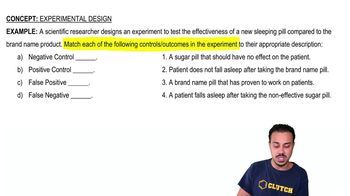
Experimental Design Example 1

Observational Study

Observational studies involve monitoring subjects without intervention, such as case reports or cross-sectional studies. These designs can identify associations but cannot definitively establish cause-effect relationships like experimental studies.
추천 영상:
01:35
Scientific Method Example 1

Epidemiological Study Designs

Epidemiological study designs include experimental and observational types, each suited for different research questions. Understanding their differences helps in selecting the appropriate method to assess drug efficacy or disease patterns.
추천 영상:
02:50
Experimental Design Example 1
관련 실천
교과서 질문

State what type of mortality rate is applicable.


Scenario 1: Out of 6,000 live births last week, 10 of the women died.

Type of mortality rate?

Scenario 2: 300 patients had disease X last year, 10 of whom died.

Type of mortality rate?

Scenario 3: Of the 120,000 live births in a particular community last year, 15 of the babies died before their first birthday.

Type of mortality rate?

Scenario 4: Out of 3,000 people in a given population, 100 died of pneumonia.

Type of mortality rate?

Calculated mortality rate (expressed per 100 in the population):

1152
views
교과서 질문

Diseases that the CDC collects information on through collaboration with state and local health authorities are called (NCLEX/HESI/TEAS)

a. Communicable diseases.

b. Reportable diseases.

c. Nationally notifiable diseases.

d. Investigative diseases.

e. Case report illnesses.

1348
views
교과서 질문

A(n) _______________________ groups the study populations by exposure versus nonexposure to a certain risk factor to see if either group develops the outcome in question.

a. Experimental study

b. Case report

c. Cross-sectional study

d. Correlation study

e. Observational study

1252
views
교과서 질문

Label the following modes of transmission as either direct or indirect. For all indirect transmissions, also specify which of the three categories of indirect transmission is involved.


Transmission of HIV across the placenta:

Transmission of a pathogen through drinking contaminated water:

Transmission of malaria by a mosquito to a human host:

Transmission of a pathogen through breast milk:

Transmission of rabies by a dog bite:

Transmission of a pathogen by touching a doorknob:

Transmission of a pathogen by a contaminated needle:

Transmission of a respiratory pathogen through respiratory droplets:

1373
views
교과서 질문

Draft a Venn diagram to compare and contrast descriptive and analytical epidemiology.

1278
views
교과서 질문

From the following choices, select all of the factors that impact prevalence rate.

a. Duration of a disease

b. The type of pathogen responsible (such as if the pathogen is viral or bacterial)

c. Cure rates for a disease

d. The pathogenicity of the microbe that causes the disease

e. The effectiveness of preventive measures

f. The incidence rate of a disease

g. The quality of diagnostic tools

h. The severity of the disease

1227
views