Ch. 6 - Microbial Growth
Tortora - Microbiology: An Introduction 14th Edition
Tortora14th EditionMicrobiology: An IntroductionISBN: 9780138200398당신이 사용하는 게 아니라요?교과서 변경
6장, 문제 1

Describe binary fission.

검증된 단계별 안내
1
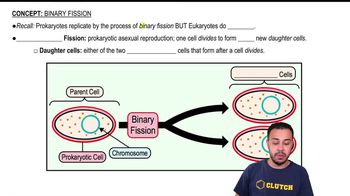
Understand that binary fission is the primary method of asexual reproduction in prokaryotic organisms such as bacteria.
Recognize that the process begins with the replication of the bacterial chromosome, ensuring that each new cell will have a complete copy of genetic material.
Note that after DNA replication, the cell elongates, and the two chromosomes move to opposite ends (poles) of the cell.
Observe that a septum, or dividing wall, forms in the middle of the elongated cell, eventually leading to the physical separation of the two daughter cells.
Conclude that binary fission results in two genetically identical daughter cells, each capable of independent growth and reproduction.

비슷한 문제에 대한 검증된 영상 답변:

이 영상 해법은 위 문제에 도움이 된다고 튜터들이 추천한 것입니다.
영상 길이:
1m
도움이 되었나요?

주요 개념

질문에 올바르게 답하기 위해 반드시 이해해야 하는 핵심 개념들은 다음과 같습니다.

Binary Fission Process

Binary fission is an asexual reproduction method used by prokaryotes like bacteria, where a single cell divides into two identical daughter cells. The process involves DNA replication, chromosome segregation, and cytokinesis, resulting in two genetically identical cells.
추천 영상:

DNA Replication in Prokaryotes

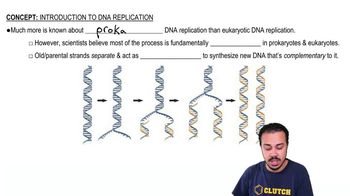
Before binary fission, the bacterial chromosome is duplicated to ensure each daughter cell receives a complete copy. This replication starts at a specific origin and proceeds bidirectionally, enabling accurate genetic material distribution.
추천 영상:
가이드 코스
03:37
Introduction to DNA Replication

Cytokinesis and Cell Division

Cytokinesis is the physical division of the cytoplasm following DNA replication and segregation. In binary fission, a septum forms at the cell center, constricting the cell membrane and wall to separate the two new cells.
추천 영상:
가이드 코스
04:26
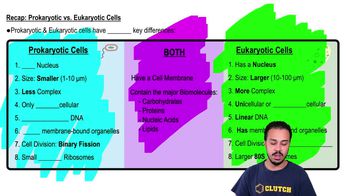
Recap:Prokaryotic vs. Eukaryotic Cells