Ch. 12 - The Eukaryotes: Fungi, Algae, Protozoa, and Helminths
Tortora - Microbiology: An Introduction 14th Edition
Tortora14th EditionMicrobiology: An IntroductionISBN: 9780138200398당신이 사용하는 게 아니라요?교과서 변경
8장, 문제 5

Differentiate cellular and plasmodial slime molds. How does each survive adverse environmental conditions?

검증된 단계별 안내
1
Start by defining cellular slime molds: these are amoeboid protists that exist as individual cells during most of their life cycle but can aggregate to form a multicellular structure when conditions become unfavorable.
Next, define plasmodial slime molds: these exist as a large, multinucleate single cell called a plasmodium, which moves and feeds as one continuous mass without cell division.
Compare their survival strategies: cellular slime molds survive adverse conditions by aggregating into a fruiting body that produces spores, which are resistant to harsh environments and can germinate when conditions improve.
Explain how plasmodial slime molds survive: they form hardened structures called sclerotia by drying and thickening their plasmodium, allowing them to endure unfavorable conditions until moisture and nutrients return.
Summarize the key differences: cellular slime molds have a life cycle involving individual cells aggregating into a multicellular form for spore dispersal, while plasmodial slime molds remain as a multinucleate mass and survive by forming sclerotia.

비슷한 문제에 대한 검증된 영상 답변:

이 영상 해법은 위 문제에 도움이 된다고 튜터들이 추천한 것입니다.
영상 길이:
2m
도움이 되었나요?

주요 개념

질문에 올바르게 답하기 위해 반드시 이해해야 하는 핵심 개념들은 다음과 같습니다.

Cellular Slime Molds

Cellular slime molds are unicellular amoeboid organisms that live independently but aggregate into a multicellular structure when food is scarce. Each cell retains its individuality during aggregation, forming a slug-like pseudoplasmodium that eventually produces spores for reproduction.
추천 영상:
01:53
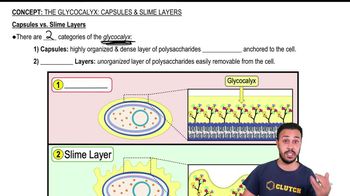
Capsules vs. Slime Layers

Plasmodial Slime Molds

Plasmodial slime molds exist as a large, multinucleate single cell called a plasmodium, formed by repeated nuclear division without cell division. This plasmodium moves as a giant amoeba, engulfing food particles, and forms fruiting bodies to release spores under unfavorable conditions.
추천 영상:
01:53
Capsules vs. Slime Layers

Survival Strategies in Adverse Conditions

Cellular slime molds survive harsh environments by forming resistant spores after aggregation, while plasmodial slime molds form hardened structures called sclerotia. Both strategies protect the organism until favorable conditions return, enabling spore germination or plasmodium reactivation.
추천 영상:
04:18
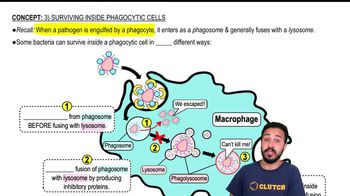
Surviving Inside Phagocytic Cells