
교과서 질문
The ability of a virus to infect an organism is regulated by
a. the host species.
b. the type of cells.
c. the availability of an attachment site.
d. cell factors necessary for viral replication.
e. all of the above
1243
views

 검증된 단계별 안내
 03:37
03:37
 05:12
05:12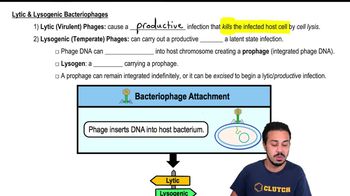 04:34
04:34The ability of a virus to infect an organism is regulated by
a. the host species.
b. the type of cells.
c. the availability of an attachment site.
d. cell factors necessary for viral replication.
e. all of the above
Compare biosynthesis of a + stranded RNA and a - stranded RNA virus.
Recall from Chapter 1 that Koch's postulates are used to determine the etiology of a
disease. Why is it difficult to determine the etiology of
a. a viral infection, such as influenza?
b. cancer?
Which of the following would be the first step in the biosynthesis of a virus with reverse transcriptase?
a. A complementary strand of RNA must be synthesized.
b. Double-stranded RNA must be synthesized.
c. A complementary strand of DNA must be synthesized from an RNA template.
d. A complementary strand of DNA must be synthesized from a DNA template.
e. None of the above
Label the principal events of attachment, biosynthesis, entry, and maturation of a + stranded RNA virus. Draw in uncoating.
Some antibiotics activate phage genes. MRSA releasing Panton-Valentine leukocidin is a toxin that can cause a life-threatening disease. Why can such a disease develop following antibiotic treatment?