Ch. 14 - Principles of Disease and Epidemiology
Tortora - Microbiology: An Introduction 14th Edition
Tortora14th EditionMicrobiology: An IntroductionISBN: 9780138200398당신이 사용하는 게 아니라요?교과서 변경
10장, 문제 1

Differentiate the terms in each of the following pairs:
a. Etiology and pathogenesis
b. Infection and disease
c. Communicable disease and noncommunicable disease

검증된 단계별 안내
1
Step 1: Define 'etiology' as the study of the cause or origin of a disease, focusing on identifying the specific agent or factors responsible for the disease. Define 'pathogenesis' as the process by which the disease develops and progresses in the host, including the mechanisms of tissue damage and clinical manifestations.
Step 2: Define 'infection' as the invasion and multiplication of microorganisms such as bacteria, viruses, or parasites within the host's body. Define 'disease' as the condition that results when the infection causes damage or dysfunction in the host, leading to symptoms and signs.
Step 3: Define 'communicable disease' as an illness that can be transmitted from one person to another, either directly or indirectly, through various modes such as contact, droplets, or vectors. Define 'noncommunicable disease' as a disease that is not transmitted between people, often caused by genetic, environmental, or lifestyle factors.
Step 4: For each pair, highlight the key difference: etiology focuses on cause, pathogenesis on development; infection is presence of microbes, disease is the harmful effect; communicable diseases spread between hosts, noncommunicable do not.
Step 5: Summarize by providing examples for each term to reinforce understanding, such as tuberculosis for communicable disease and diabetes for noncommunicable disease.

비슷한 문제에 대한 검증된 영상 답변:

이 영상 해법은 위 문제에 도움이 된다고 튜터들이 추천한 것입니다.
영상 길이:
3m

주요 개념

질문에 올바르게 답하기 위해 반드시 이해해야 하는 핵심 개념들은 다음과 같습니다.

Etiology and Pathogenesis

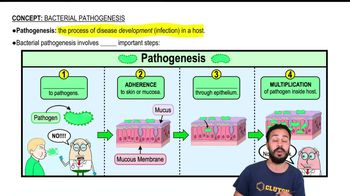
Etiology refers to the study of the cause or origin of a disease, identifying the specific agent or factors responsible. Pathogenesis describes the mechanism by which the disease develops and progresses in the host, including the biological and physiological changes that occur.
추천 영상:
02:35
Intro to Bacterial Pathogenesis

Infection and Disease

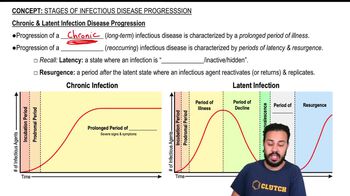
Infection is the invasion and multiplication of microorganisms such as bacteria, viruses, or fungi within the body. Disease occurs when the infection causes damage or dysfunction in the host, leading to symptoms and clinical signs.
추천 영상:
05:14
Chronic & Latent Infection Disease Progression

Communicable Disease and Noncommunicable Disease

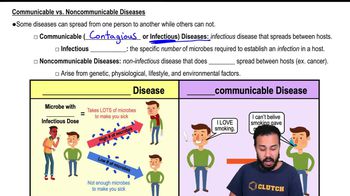
Communicable diseases are illnesses that can be transmitted from one person to another, directly or indirectly, often caused by infectious agents. Noncommunicable diseases are not spread between people and usually result from genetic, lifestyle, or environmental factors.
추천 영상:
04:57
Communicable vs. Noncommunicable Diseases