Ch. 15 - Microbial Mechanisms of Pathogenicity
Tortora - Microbiology: An Introduction 14th Edition
Tortora14th EditionMicrobiology: An IntroductionISBN: 9780138200398당신이 사용하는 게 아니라요?교과서 변경
11장, 문제 1

The removal of plasmids reduces virulence in which of the following organisms?
a. C. tetani
b. E. coli
c. S. enterica
d. S. mutans
e. C. botulinum

검증된 단계별 안내
1
Step 1: Understand the concept of plasmids and their role in bacterial virulence. Plasmids are small, circular DNA molecules separate from chromosomal DNA that can carry genes responsible for virulence factors such as toxins, antibiotic resistance, or adhesion molecules.
Step 2: Review the characteristics of each organism listed: C. tetani, E. coli, S. enterica, S. mutans, and C. botulinum, focusing on whether their virulence factors are plasmid-encoded or chromosomally encoded.
Step 3: Identify which organism’s virulence is known to be directly linked to plasmid-encoded genes. For example, some strains of E. coli carry plasmids that encode toxins or other virulence factors.
Step 4: Compare the role of plasmids in virulence for each organism. For instance, C. tetani and C. botulinum produce toxins encoded on their chromosomes, not plasmids, while certain E. coli strains rely on plasmids for virulence.
Step 5: Conclude that the removal of plasmids reduces virulence in the organism(s) where virulence factors are plasmid-encoded, which is typically E. coli among the options given.

비슷한 문제에 대한 검증된 영상 답변:

이 영상 해법은 위 문제에 도움이 된다고 튜터들이 추천한 것입니다.
영상 길이:
2m

주요 개념

질문에 올바르게 답하기 위해 반드시 이해해야 하는 핵심 개념들은 다음과 같습니다.

Plasmids and Their Role in Bacterial Virulence

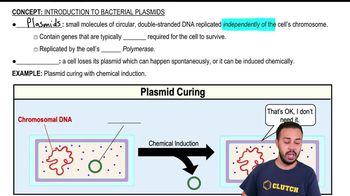
Plasmids are small, circular DNA molecules independent of the bacterial chromosome that often carry genes beneficial for survival, including virulence factors. These extrachromosomal elements can encode toxins, adhesion factors, or antibiotic resistance, directly influencing a bacterium's ability to cause disease.
추천 영상:
02:52
Introduction to Bacterial Plasmids

Virulence Factors Encoded by Plasmids in Specific Bacteria

Certain bacteria rely on plasmid-encoded genes for their virulence. For example, in Escherichia coli, plasmids can carry genes for toxins and adhesion molecules, while in Clostridium species, virulence is often chromosomally encoded. Understanding which organisms depend on plasmids for virulence helps identify the impact of plasmid removal.
추천 영상:
02:52
Introduction to Bacterial Plasmids

Impact of Plasmid Curing on Bacterial Pathogenicity

Plasmid curing refers to the loss or removal of plasmids from bacteria, which can lead to reduced virulence if the plasmid carries essential pathogenic genes. This process is used experimentally to determine the role of plasmids in disease and can affect the bacterium's ability to infect or produce toxins.
추천 영상:
02:52
Introduction to Bacterial Plasmids