Ch. 15 - Microbial Mechanisms of Pathogenicity
Tortora - Microbiology: An Introduction 14th Edition
Tortora14th EditionMicrobiology: An IntroductionISBN: 9780138200398당신이 사용하는 게 아니라요?교과서 변경
11장, 문제 10

Which of the following statements is true?
a. The primary goal of a pathogen is to kill its host.
b. Evolution selects for the most virulent pathogens.
c. A successful pathogen doesn't kill its host before it is transmitted.
d. A successful pathogen never kills its host.

검증된 단계별 안내
1
Step 1: Understand the concept of pathogen-host interaction, where the pathogen's goal is to survive and reproduce, often by transmitting to new hosts rather than killing the current host immediately.
Step 2: Analyze option (a): 'The primary goal of a pathogen is to kill its host.' Consider that killing the host too quickly can limit transmission opportunities, so this is generally not true.
Step 3: Analyze option (b): 'Evolution selects for the most virulent pathogens.' Remember that evolution favors traits that maximize transmission, which may not always mean maximum virulence; extremely virulent pathogens may reduce their own spread.
Step 4: Analyze option (c): 'A successful pathogen doesn't kill its host before it is transmitted.' This aligns with the idea that pathogens must keep the host alive long enough to spread to new hosts, making this statement likely true.
Step 5: Analyze option (d): 'A successful pathogen never kills its host.' While some pathogens may not kill their hosts, others can be lethal but still successful if transmission occurs before death; thus, this statement is too absolute to be true.

비슷한 문제에 대한 검증된 영상 답변:

이 영상 해법은 위 문제에 도움이 된다고 튜터들이 추천한 것입니다.
영상 길이:
3m

주요 개념

질문에 올바르게 답하기 위해 반드시 이해해야 하는 핵심 개념들은 다음과 같습니다.

Pathogen-Host Relationship

Pathogens interact with their hosts in ways that balance survival and reproduction. Killing the host too quickly can limit the pathogen's ability to spread, so many pathogens evolve strategies to coexist without immediate host death.
추천 영상:
05:59
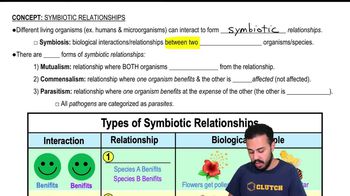
Symbiotic Relationships

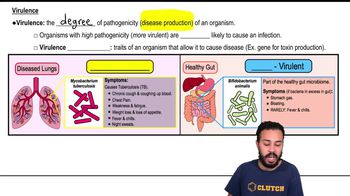
Virulence and Evolution

Virulence refers to the degree of damage a pathogen causes. Evolution tends to favor pathogens that optimize transmission, which may not always mean maximum virulence; overly virulent pathogens risk killing hosts before spreading.
추천 영상:
03:05
Virulence

Transmission and Pathogen Success

A pathogen's success depends on effective transmission to new hosts. Therefore, pathogens that allow their hosts to survive long enough to spread the infection are more likely to persist and evolve.
추천 영상:
03:40
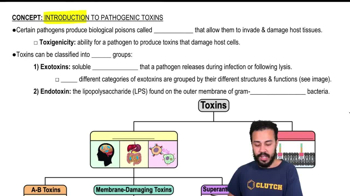
Introduction to Pathogenic Toxins