
Ch. 16 - Innate Immunity: Nonspecific Defenses of the Host
Tortora - Microbiology: An Introduction 14th Edition
Tortora14th EditionMicrobiology: An IntroductionISBN: 9780138200398당신이 사용하는 게 아니라요?교과서 변경
12장, 문제 7

Give several examples of how microbes evade the complement system.

검증된 단계별 안내
1
Understand that the complement system is a part of the innate immune response that helps clear pathogens through processes like opsonization, inflammation, and formation of the membrane attack complex (MAC).
Identify that microbes have evolved various strategies to evade or inhibit the complement system to survive and cause infection.
List examples of microbial evasion mechanisms such as: production of surface proteins that bind and inactivate complement components, secretion of proteases that degrade complement proteins, and expression of capsules that prevent complement activation or deposition.
Explain specific examples, for instance, some bacteria produce proteins like Factor H binding proteins that recruit host regulatory proteins to their surface, thereby inhibiting complement activation.
Mention that some microbes can alter their surface structures to avoid recognition by complement or can produce molecules that mimic host molecules to prevent complement-mediated attack.

비슷한 문제에 대한 검증된 영상 답변:

이 영상 해법은 위 문제에 도움이 된다고 튜터들이 추천한 것입니다.
영상 길이:
1m
도움이 되었나요?

주요 개념

질문에 올바르게 답하기 위해 반드시 이해해야 하는 핵심 개념들은 다음과 같습니다.

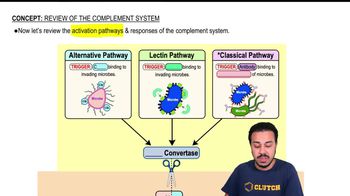
Complement System Overview

The complement system is a group of proteins in the blood that helps clear pathogens by promoting inflammation, opsonization, and cell lysis. It can be activated via classical, lectin, or alternative pathways, leading to the formation of the membrane attack complex that destroys microbial membranes.
추천 영상:
가이드 코스
05:15
Review of the Complement System

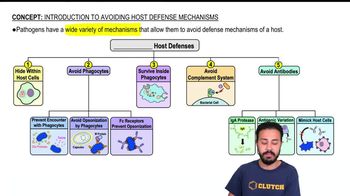
Microbial Evasion Mechanisms

Microbes evade the complement system through various strategies such as producing surface proteins that inhibit complement activation, secreting enzymes that degrade complement proteins, or mimicking host molecules to avoid recognition. These tactics help pathogens survive and persist in the host.
추천 영상:
가이드 코스
01:59
Introduction to Avoiding Host Defense Mechanisms

Examples of Complement Evasion by Microbes

Examples include Staphylococcus aureus producing protein A to bind antibodies and prevent complement activation, Neisseria meningitidis expressing factor H binding protein to recruit host regulators, and some bacteria secreting proteases that cleave complement components, thereby blocking the cascade.
추천 영상:
가이드 코스
05:15
Review of the Complement System