
Ch. 19 - Disorders Associated with the Immune System
Tortora - Microbiology: An Introduction 14th Edition
Tortora14th EditionMicrobiology: An IntroductionISBN: 9780138200398당신이 사용하는 게 아니라요?교과서 변경
15장, 문제 8

In what ways do tumor cells differ antigenically from normal cells? Explain how tumor cells may be destroyed by the immune system.

검증된 단계별 안내
1
Understand that tumor cells differ antigenically from normal cells primarily because they express tumor-associated antigens (TAAs) or tumor-specific antigens (TSAs) that are either absent or present at much lower levels on normal cells. These antigens can arise due to mutations, altered protein expression, or abnormal glycosylation patterns.
Recognize that tumor-associated antigens can be classified into two main types: tumor-specific antigens, which are unique to tumor cells, and tumor-associated antigens, which are found in both normal and tumor cells but are overexpressed or aberrantly expressed in tumors.
Explain that the immune system can recognize these abnormal antigens through antigen-presenting cells (APCs) that process tumor antigens and present them on major histocompatibility complex (MHC) molecules to T cells, initiating an immune response.
Describe how cytotoxic T lymphocytes (CTLs) recognize tumor antigens presented on MHC class I molecules of tumor cells and induce apoptosis in these cells by releasing perforin and granzymes or through Fas-FasL interactions.
Mention that natural killer (NK) cells can also destroy tumor cells, especially those with downregulated MHC class I molecules, by recognizing stress-induced ligands and releasing cytotoxic granules, thus contributing to immune surveillance against tumors.

비슷한 문제에 대한 검증된 영상 답변:

이 영상 해법은 위 문제에 도움이 된다고 튜터들이 추천한 것입니다.
영상 길이:
2m
도움이 되었나요?

주요 개념

질문에 올바르게 답하기 위해 반드시 이해해야 하는 핵심 개념들은 다음과 같습니다.

Tumor-Specific and Tumor-Associated Antigens

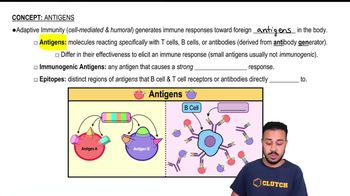
Tumor cells express unique or altered proteins called tumor-specific antigens (TSAs) or tumor-associated antigens (TAAs) that are not present or are minimally expressed on normal cells. These antigens arise due to mutations or abnormal gene expression, allowing the immune system to distinguish tumor cells from healthy cells.
추천 영상:

Immune Recognition and Activation

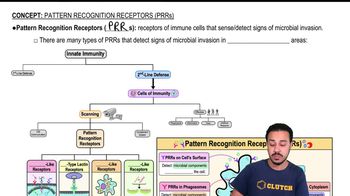
The immune system recognizes tumor antigens through antigen-presenting cells that process and present these antigens to T cells. This activates cytotoxic T lymphocytes (CTLs) and helper T cells, initiating an immune response targeted specifically against tumor cells displaying these abnormal antigens.
추천 영상:
가이드 코스
04:24
Pattern Recognition Receptors

Mechanisms of Tumor Cell Destruction

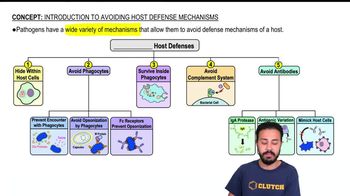
Activated cytotoxic T cells kill tumor cells by inducing apoptosis through perforin and granzymes or by engaging death receptors. Additionally, natural killer (NK) cells and antibody-dependent cellular cytotoxicity (ADCC) contribute to tumor cell elimination, highlighting multiple immune pathways involved in tumor destruction.
추천 영상:
가이드 코스
01:59
Introduction to Avoiding Host Defense Mechanisms