Why is C. perfringens likely to grow in gangrenous wounds?
Ch. 23 - Microbial Diseases of the Cardiovascular and Lymphatic Systems

모든 교과서
Tortora 14th Edition
Ch. 23 - Microbial Diseases of the Cardiovascular and Lymphatic Systems
문제 7
Tortora 14th Edition
Ch. 23 - Microbial Diseases of the Cardiovascular and Lymphatic Systems
문제 719장, 문제 7
Use the following choices to answer the question given below:
a. Brucellosis
b. Malaria
c. Relapsing fever
d. Rocky Mountain spotted fever
e. Ebola
The patient’s fever spikes each evening. Oxidase-positive, gram-negative coccobacilli were isolated from a lesion on his arm. What is your diagnosis?
검증된 단계별 안내1
Step 1: Analyze the clinical symptom described — the patient's fever spikes each evening. This pattern is characteristic of certain infectious diseases, particularly those with cyclical fever patterns.
Step 2: Consider the microbiological characteristics of the isolated organism: it is oxidase-positive, gram-negative coccobacilli. This information helps narrow down the possible pathogens.
Step 3: Review the list of diseases and their typical causative agents: for example, Brucellosis is caused by Brucella species (oxidase-positive, gram-negative coccobacilli), malaria is caused by Plasmodium (a protozoan, not bacteria), relapsing fever is caused by Borrelia (spirochetes, not coccobacilli), Rocky Mountain spotted fever is caused by Rickettsia (gram-negative coccobacilli but oxidase-negative), and Ebola is a virus.
Step 4: Match the clinical presentation (fever spikes each evening) and microbiological data (oxidase-positive, gram-negative coccobacilli) to the most likely diagnosis from the given options.
Step 5: Conclude that the diagnosis corresponds to the disease caused by the organism matching both the clinical and microbiological features.

비슷한 문제에 대한 검증된 영상 답변:
이 영상 해법은 위 문제에 도움이 된다고 튜터들이 추천한 것입니다.
영상 길이:
1m주요 개념
질문에 올바르게 답하기 위해 반드시 이해해야 하는 핵심 개념들은 다음과 같습니다.
Clinical Presentation of Relapsing Fever
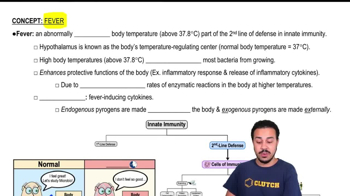
Relapsing fever is characterized by recurring episodes of fever that typically spike and then subside, often in a cyclical pattern such as daily or every few days. Recognizing this pattern helps differentiate it from other febrile illnesses. The fever spikes each evening in this case suggest a relapsing pattern typical of relapsing fever.
추천 영상:
Fever
Gram-negative Coccobacilli and Oxidase Test
Gram-negative coccobacilli are short, rod-shaped bacteria that stain pink in Gram staining. The oxidase test detects the presence of cytochrome c oxidase enzyme; a positive result indicates certain bacterial groups. Identifying oxidase-positive, gram-negative coccobacilli narrows down the possible pathogens causing the infection.
추천 영상:
Gram-Negative Cell Walls
Differential Diagnosis of Vector-borne Febrile Illnesses
Diseases like brucellosis, malaria, relapsing fever, Rocky Mountain spotted fever, and Ebola have distinct clinical and microbiological features. Understanding their vectors, symptoms, and laboratory findings is essential for accurate diagnosis. For example, relapsing fever is caused by Borrelia species, which are spirochetes, not coccobacilli, so the microbiological findings must be carefully correlated with clinical signs.
추천 영상:
Differential Staining
관련 실천
교과서 질문
1378
views
교과서 질문
List the causative agent and method of transmission of infectious mononucleosis.
1344
views
교과서 질문
Compare and contrast cat-scratch disease and toxoplasmosis.
1434
views
교과서 질문
List the causative agent, method of transmission, and reservoir for schistosomiasis, toxoplasmosis, and Chagas disease. Which disease are you most likely to get in the United States? Where are the other diseases endemic?
1293
views
교과서 질문
Which of the following is not a tickborne disease?
a. Babesiosis
b. Ehrlichiosis
c. Lyme disease
d. Relapsing fever
e. Tularemia
1345
views
교과서 질문
Use the following choices to answer the question given below:
a. Brucellosis
b. Malaria
c. Relapsing fever
d. Rocky Mountain spotted fever
e. Ebola
The patient was hospitalized with fever and headache. Spirochetes were observed in her blood. What is your diagnosis?
899
views