Ch. 25 - Microbial Diseases of the Digestive System
Tortora - Microbiology: An Introduction 14th Edition
Tortora14th EditionMicrobiology: An IntroductionISBN: 9780138200398당신이 사용하는 게 아니라요?교과서 변경
21장, 문제 2

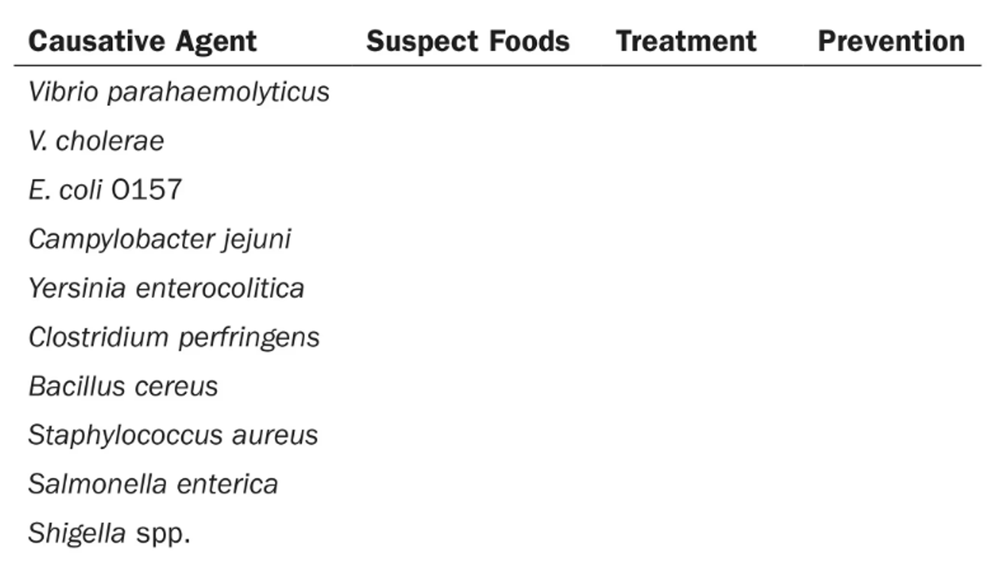
Complete the following table:
Table listing various bacterial causative agents with columns for suspect foods, treatment, and prevention left blank.

검증된 단계별 안내
1
Step 1: Identify the common suspect foods associated with each bacterial causative agent. For example, Vibrio parahaemolyticus is commonly linked to seafood, especially raw or undercooked shellfish.
Step 2: Determine the typical treatment options for infections caused by each bacterium. This often involves supportive care such as rehydration, and in some cases, specific antibiotics depending on the pathogen and severity.
Step 3: Outline prevention strategies for each bacterium, which generally include proper food handling, cooking, and storage practices to avoid contamination and bacterial growth.
Step 4: For each bacterium, fill in the 'Suspect Foods' column with the foods most commonly implicated in outbreaks or infections, such as undercooked meat, unpasteurized dairy, or contaminated water.
Step 5: Complete the 'Treatment' and 'Prevention' columns by summarizing the standard medical treatments and public health measures, such as antibiotic therapy, hydration, vaccination (if available), and hygiene practices like handwashing and safe food preparation.

비슷한 문제에 대한 검증된 영상 답변:

이 영상 해법은 위 문제에 도움이 된다고 튜터들이 추천한 것입니다.
도움이 되었나요?

주요 개념

질문에 올바르게 답하기 위해 반드시 이해해야 하는 핵심 개념들은 다음과 같습니다.

Foodborne Pathogens and Their Characteristics

Understanding the specific bacteria listed as causative agents is essential. Each pathogen has unique traits, such as preferred environments, modes of transmission, and symptoms caused. For example, Vibrio species are often linked to seafood, while E. coli O157 is associated with undercooked beef. Recognizing these traits helps identify suspect foods and appropriate responses.
추천 영상:
가이드 코스
03:40
Introduction to Pathogenic Toxins

Treatment of Bacterial Foodborne Infections

Treatment varies depending on the bacterial agent and severity of infection. Some infections require antibiotics, while others are managed with supportive care like hydration. For instance, cholera caused by V. cholerae is treated with rehydration therapy, whereas some E. coli infections may not benefit from antibiotics. Knowing treatment protocols is crucial for effective patient care.
추천 영상:
가이드 코스
03:06
Bacterial Transformation

Prevention Strategies for Foodborne Illnesses

Preventing foodborne diseases involves proper food handling, cooking, and storage practices. Measures include thorough cooking of meats, avoiding cross-contamination, and maintaining hygiene. Specific prevention may target particular pathogens, such as avoiding raw seafood to prevent Vibrio infections. Understanding prevention reduces incidence and protects public health.
추천 영상:
가이드 코스
04:59
1) Viruses Prevent Antiviral Effects of AVPs