Ch. 28 - Applied and Industrial Microbiology
Tortora - Microbiology: An Introduction 14th Edition
Tortora14th EditionMicrobiology: An IntroductionISBN: 9780138200398당신이 사용하는 게 아니라요?교과서 변경
24장, 문제 9

Which of the following reactions is undesirable in winemaking?
a. Sucrose → ethanol
b. Ethanol → acetic acid
c. Malic acid → lactic acid
d. Glucose → pyruvic acid

검증된 단계별 안내
1
Step 1: Understand the context of winemaking and the role of each reaction. Winemaking primarily involves fermentation, where sugars are converted into ethanol by yeast.
Step 2: Analyze each reaction: (a) Sucrose → ethanol represents the fermentation of sugar to alcohol, which is a desired process in winemaking.
Step 3: Reaction (b) Ethanol → acetic acid involves the oxidation of ethanol to acetic acid, which leads to vinegar formation and spoilage, making it undesirable in winemaking.
Step 4: Reaction (c) Malic acid → lactic acid is malolactic fermentation, a process that softens wine acidity and is often desirable in winemaking.
Step 5: Reaction (d) Glucose → pyruvic acid is a step in glycolysis, a normal metabolic pathway leading to fermentation, so it is not undesirable.

비슷한 문제에 대한 검증된 영상 답변:

이 영상 해법은 위 문제에 도움이 된다고 튜터들이 추천한 것입니다.
영상 길이:
1m

주요 개념

질문에 올바르게 답하기 위해 반드시 이해해야 하는 핵심 개념들은 다음과 같습니다.

Fermentation in Winemaking

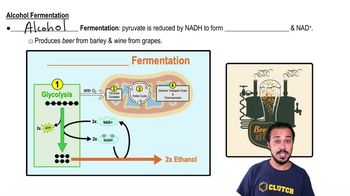
Fermentation is the biochemical process where yeast converts sugars like sucrose and glucose into ethanol and carbon dioxide. This reaction is essential in winemaking as it produces alcohol, the primary desired product, and influences the wine's flavor and aroma.
추천 영상:
01:59
Alcohol Fermentation

Acetic Acid Formation and Wine Spoilage

The conversion of ethanol to acetic acid is typically caused by acetic acid bacteria and is undesirable in winemaking. This reaction leads to vinegar-like off-flavors, spoilage, and a decrease in wine quality, making it a negative reaction to avoid.
추천 영상:
04:07
Formation & Breakdown of Nucleic Acids

Malolactic Fermentation

Malolactic fermentation is a secondary fermentation where malic acid is converted into lactic acid by bacteria. This process softens the wine's acidity, improves mouthfeel, and is generally considered beneficial in many wine styles.
추천 영상:
01:59
Alcohol Fermentation