Ch. 9 - Biotechnology & DNA Technology
Tortora - Microbiology: An Introduction 14th Edition
Tortora14th EditionMicrobiology: An IntroductionISBN: 9780138200398당신이 사용하는 게 아니라요?교과서 변경
5장, 문제 8

You are attempting to insert a gene for saltwater tolerance into a plant by using the Ti plasmid. In addition to the desired gene, you add a gene for tetracycline resistance (tet) to the plasmid. What is the purpose of the tet gene?

검증된 단계별 안내
1
Understand that the Ti plasmid is used as a vector to transfer genes into plant cells, allowing for genetic modification.
Recognize that the tetracycline resistance (tet) gene is commonly used as a selectable marker in genetic engineering.
The purpose of the tet gene is to allow researchers to identify and select only those plant cells that have successfully incorporated the Ti plasmid with the desired gene.
This selection is done by growing the transformed cells on a medium containing tetracycline; only cells with the tet gene will survive.
Thus, the tet gene helps distinguish transformed cells from non-transformed ones, ensuring that further analysis or cultivation is done on genetically modified plants.

비슷한 문제에 대한 검증된 영상 답변:

이 영상 해법은 위 문제에 도움이 된다고 튜터들이 추천한 것입니다.
영상 길이:
1m

주요 개념

질문에 올바르게 답하기 위해 반드시 이해해야 하는 핵심 개념들은 다음과 같습니다.

Ti Plasmid and Genetic Engineering

The Ti plasmid is a natural vector from Agrobacterium tumefaciens used to transfer genes into plants. It enables the insertion of desired genes, such as saltwater tolerance, into the plant genome, facilitating genetic modification for improved traits.
추천 영상:
01:28
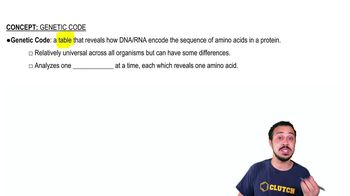
Genetic Code

Selectable Marker Genes

Selectable marker genes, like tetracycline resistance (tet), are added to plasmids to identify and select successfully transformed cells. Only cells that incorporate the plasmid survive in the presence of the antibiotic, allowing researchers to isolate genetically modified plants.
추천 영상:
03:27
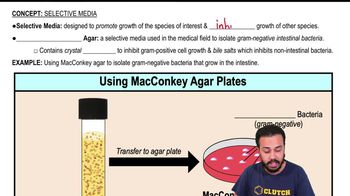
Selective Media

Antibiotic Resistance in Molecular Cloning

Antibiotic resistance genes provide a survival advantage under antibiotic exposure, serving as a tool to confirm gene insertion. In this case, the tet gene allows researchers to apply tetracycline to kill non-transformed cells, ensuring only those with the plasmid grow.
추천 영상:
03:20
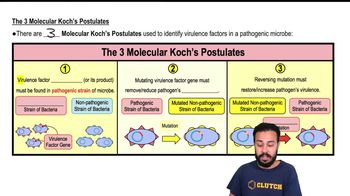
The 3 Molecular Koch's Postulates