Skip to main content
Microeconomics
나의 코스
배우기
시험 준비
AI 튜터
학습 가이드
플래시카드
탐험해 보세요
앱을 사용해 보세요
나의 코스
배우기
시험 준비
AI 튜터
학습 가이드
플래시카드
탐험해 보세요
앱을 사용해 보세요
뒤로
Dynamic AD-AS Model: Monetary Policy definitions
카드를 뒤집기 위해 탭할 수 있습니다.
Monetary Policy
카드를 뒤집기 위해 탭할 수 있습니다.
👆
Monetary Policy
Central bank actions that adjust money supply to influence interest rates and aggregate demand, aiming to stabilize economic output and price levels.
진행 상황 추적
컨트롤 버튼이 '내비게이션' 모드로 변경되었습니다.
1/15
관련 플래시카드
추천 영상
Dynamic AD-AS Model: Monetary Policy quiz
Dynamic AD-AS Model: Monetary Policy
15 용어
VideoThumbView.guidedCourse
03:15
Dynamic AD-AS Model: Contractionary Monetary Policy
5
views
VideoThumbView.guidedCourse
04:37
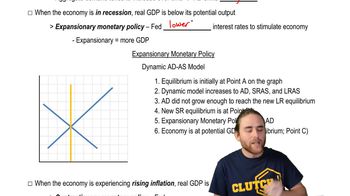
Dynamic AD-AS Model: Expansionary Monetary Policy
4
views
이 집합의 용어 (15)
하이드의 정의
Monetary Policy
Central bank actions that adjust money supply to influence interest rates and aggregate demand, aiming to stabilize economic output and price levels.
Aggregate Demand
Total spending on goods and services in an economy, affected by interest rates and monetary policy, shifting to restore equilibrium.
Aggregate Supply
Total output produced by firms, represented by both short-run and long-run curves, shifting as the economy grows.
Long Run Aggregate Supply
Represents potential GDP, shifting right as the economy expands, marking the full employment output level.
Short Run Aggregate Supply
Shows current production capacity, shifting right with economic growth, but can diverge from long-run equilibrium.
Expansionary Policy
Strategy involving lower interest rates and increased money supply to boost spending and investment during recession.
Contractionary Policy
Approach using higher interest rates to reduce spending and investment, controlling inflation when output exceeds potential.
Interest Rate
Cost of borrowing money, manipulated by central banks to influence investment, consumption, and aggregate demand.
Money Supply
Total amount of currency and deposits available, adjusted by the central bank to affect economic activity and price levels.
Potential GDP
Maximum sustainable output an economy can achieve without causing inflation, guiding policy decisions.
Equilibrium
Point where aggregate demand and aggregate supply intersect, determining stable price level and real GDP.
Price Level
Average of current prices for goods and services, influenced by shifts in aggregate demand and supply.
Recession
Period when output falls below potential GDP, prompting expansionary monetary policy to restore equilibrium.
Inflation
Rise in overall price levels, often resulting from excessive aggregate demand, managed by contractionary policy.
Investment
Spending by firms on capital goods, sensitive to interest rates and a key driver of aggregate demand changes.
 뒤로뒤로
뒤로뒤로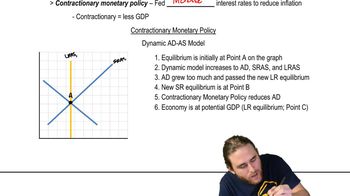
 03:15
03:15