Skip to main content
Microeconomics
나의 코스
배우기
시험 준비
AI 튜터
학습 가이드
플래시카드
탐험해 보세요
앱을 사용해 보세요
나의 코스
배우기
시험 준비
AI 튜터
학습 가이드
플래시카드
탐험해 보세요
앱을 사용해 보세요
뒤로
Introduction to Fiscal Policy definitions
카드를 뒤집기 위해 탭할 수 있습니다.
Fiscal Policy
카드를 뒤집기 위해 탭할 수 있습니다.
👆
Fiscal Policy
Government decisions on spending and taxes, directly influencing national economic activity and stability.
진행 상황 추적
컨트롤 버튼이 '내비게이션' 모드로 변경되었습니다.
1/15
관련 플래시카드
추천 영상
Introduction to Fiscal Policy quiz
Introduction to Fiscal Policy
15 용어
VideoThumbView.guidedCourse
09:33
Introduction; Discretionary Policy and Automatic Stabilizers
6
views
이 집합의 용어 (15)
하이드의 정의
Fiscal Policy
Government decisions on spending and taxes, directly influencing national economic activity and stability.
Monetary Policy
Central bank actions affecting money supply and interest rates, separate from government spending and taxation.
Government Spending
Expenditures by the national government, forming a key component of GDP and impacting economic growth.
Taxes
Mandatory payments to the government, reducing disposable income and affecting household consumption.
GDP
Total value of goods and services produced, calculated using consumption, investment, government spending, and net exports.
Disposable Income
Money available to households after taxes, used for consumption or saving, crucial for economic activity.
Consumption
Spending by households on goods and services, influenced by disposable income and a major part of GDP.
Investment
Expenditures on capital goods, contributing to GDP alongside consumption, government spending, and net exports.
Discretionary Fiscal Policy
Proactive government measures, such as changing spending or taxes, to influence economic conditions.
Automatic Stabilizers
Mechanisms adjusting government spending and taxes automatically with the business cycle, moderating economic fluctuations.
Business Cycle
Recurring phases of economic expansion and contraction, affecting income, employment, and government fiscal responses.
Aggregate Demand
Total demand for goods and services in the economy, influenced by government spending, taxes, and disposable income.
Unemployment Insurance
Government payments to the jobless, increasing spending during recessions and decreasing during economic booms.
Recession
Period of economic decline marked by falling GDP, rising unemployment, and increased government support.
Economic Boom
Phase of rapid economic growth, rising income, and reduced government support for unemployment.
 뒤로뒤로
뒤로뒤로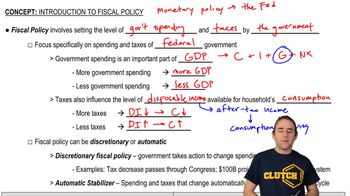
 09:33
09:33