Skip to main content
Microeconomics
나의 코스
배우기
시험 준비
AI 튜터
학습 가이드
플래시카드
탐험해 보세요
앱을 사용해 보세요
나의 코스
배우기
시험 준비
AI 튜터
학습 가이드
플래시카드
탐험해 보세요
앱을 사용해 보세요
뒤로
Monetary Policy and Aggregate Demand quiz
카드를 뒤집기 위해 탭할 수 있습니다.
How does a lower interest rate affect consumption in the economy?
카드를 뒤집기 위해 탭할 수 있습니다.
👆
How does a lower interest rate affect consumption in the economy?
A lower interest rate increases consumption because borrowing is cheaper and saving is less attractive.
진행 상황 추적
컨트롤 버튼이 '내비게이션' 모드로 변경되었습니다.
1/15
관련 플래시카드
추천 영상
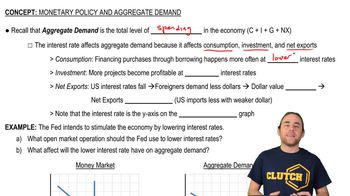
Monetary Policy and Aggregate Demand definitions
Monetary Policy and Aggregate Demand
15 용어
VideoThumbView.guidedCourse
06:24
Price Levels and the Money Market
4
views
VideoThumbView.guidedCourse
04:53
Monetary Policy and Aggregate Demand
4
views
VideoThumbView.guidedCourse
06:42
Interest Rates and Aggregate Demand
5
views
이 집합의 용어 (15)
하이드의 정의
How does a lower interest rate affect consumption in the economy?
A lower interest rate increases consumption because borrowing is cheaper and saving is less attractive.
What is the effect of lower interest rates on investment spending?
Lower interest rates increase investment spending because it reduces the cost of borrowing for businesses.
How do lower interest rates impact net exports?
Lower interest rates weaken the domestic currency, making imports more expensive and exports more competitive, thus increasing net exports.
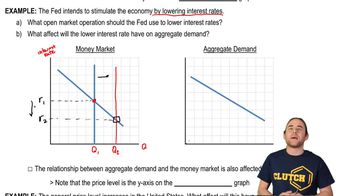
Which open market operation does the Federal Reserve use to lower interest rates?
The Federal Reserve purchases securities from the public to increase the money supply and lower interest rates.
What happens to the money supply when the Fed purchases securities?
The money supply increases because the Fed injects money into the economy by buying securities.
How does an increase in the money supply affect the equilibrium interest rate?
An increase in the money supply lowers the equilibrium interest rate in the money market.
What is the result of a lower interest rate on the aggregate demand curve?
A lower interest rate shifts the aggregate demand curve to the right, indicating increased total spending.
Which components of aggregate demand are directly affected by changes in the interest rate?
Consumption, investment, and net exports are directly affected by changes in the interest rate.
What happens to aggregate demand during a recession if the Fed lowers interest rates?
Aggregate demand increases, helping to stimulate economic activity and counteract the recession.
On the aggregate demand curve, what does a change in the price level cause?
A change in the price level causes a movement along the aggregate demand curve, not a shift of the curve.
How does an increase in the general price level affect money demand?
An increase in the price level raises money demand because people need more cash to buy goods and services.
What happens to the equilibrium interest rate if money demand increases but money supply stays the same?
The equilibrium interest rate rises because the higher demand for money increases its price.
When does the aggregate demand curve shift rather than move along the curve?
The aggregate demand curve shifts when an underlying factor, such as the interest rate, changes, not when the price level changes.
What is the y-axis variable on the money market graph?
The y-axis on the money market graph represents the interest rate, which is the price of money.
How does the Fed's open market purchase of securities help during a recession?
It increases the money supply, lowers interest rates, and stimulates spending in the economy, helping to counteract the recession.
 뒤로뒤로
뒤로뒤로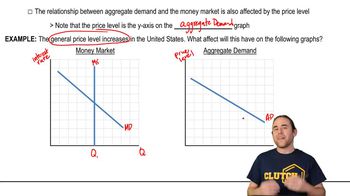
 06:24
06:24