Skip to main content
Microeconomics
나의 코스
배우기
시험 준비
AI 튜터
학습 가이드
플래시카드
탐험해 보세요
앱을 사용해 보세요
나의 코스
배우기
시험 준비
AI 튜터
학습 가이드
플래시카드
탐험해 보세요
앱을 사용해 보세요
뒤로
Monetary vs Fiscal Policy definitions
카드를 뒤집기 위해 탭할 수 있습니다.
Monetary Policy
카드를 뒤집기 위해 탭할 수 있습니다.
👆
Monetary Policy
Central bank tool adjusting interest rates and money supply to influence economic activity, acting quickly and without political bias.
진행 상황 추적
컨트롤 버튼이 '내비게이션' 모드로 변경되었습니다.
1/15
관련 플래시카드
추천 영상
Monetary vs Fiscal Policy quiz
Monetary vs Fiscal Policy
15 용어
03:13
Monetary vs Fiscal Policy
3
views
이 집합의 용어 (15)
하이드의 정의
Monetary Policy
Central bank tool adjusting interest rates and money supply to influence economic activity, acting quickly and without political bias.
Fiscal Policy
Government strategy using taxes and spending to affect consumer behavior and stimulate demand, often involving political processes.
Central Bank
Institution responsible for managing a nation's monetary policy, including setting interest rates and controlling money supply.
Interest Rate
Cost of borrowing money, set by the central bank, which influences consumer spending and business investment.
Money Supply
Total amount of currency and liquid assets available in an economy, managed by the central bank to impact economic conditions.
Government Spending
Expenditures by policymakers on goods, services, and programs to stimulate economic activity and maintain employment.
Tax Break
Reduction in taxes provided by policymakers, increasing disposable income and encouraging consumer purchases.
Disposable Income
Money available to individuals after taxes, which determines their ability to spend and drive economic growth.
GDP
Measure of total economic output, influenced by consumer spending, government actions, and monetary adjustments.
Unemployment
Condition where individuals seeking work are unable to find jobs, affected by economic policies that stimulate demand.
Inflation
General rise in prices across an economy, impacted by changes in money supply, interest rates, and government spending.
Economic Decline
Period marked by reduced spending, lower output, and rising joblessness, prompting intervention through policy tools.
Political Neutrality
Characteristic of actions taken without favoring any group or party, often associated with central bank decisions.
Market Equilibrium
State where supply and demand are balanced, maintained through policy interventions during economic fluctuations.
Policymaker
Elected official or government authority responsible for designing and implementing fiscal measures to manage the economy.
 뒤로뒤로
뒤로뒤로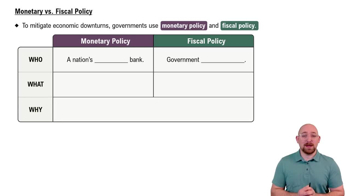
 03:13
03:13