Skip to main content
Microeconomics
나의 코스
배우기
시험 준비
AI 튜터
학습 가이드
플래시카드
탐험해 보세요
앱을 사용해 보세요
나의 코스
배우기
시험 준비
AI 튜터
학습 가이드
플래시카드
탐험해 보세요
앱을 사용해 보세요
뒤로
Monopolistic Competition in the Long Run definitions
카드를 뒤집기 위해 탭할 수 있습니다.
Monopolistic Competition
카드를 뒤집기 위해 탭할 수 있습니다.
👆
Monopolistic Competition
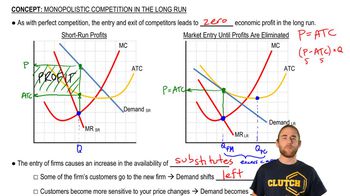
Market structure with many firms offering differentiated products and free entry and exit, leading to zero economic profit in the long run.
진행 상황 추적
컨트롤 버튼이 '내비게이션' 모드로 변경되었습니다.
1/15
관련 플래시카드
관련 실천
추천 영상
Monopolistic Competition in the Long Run quiz
Monopolistic Competition in the Long Run
15 용어
Monopolistic Competition in the Long Run
13. Monopolistic Competition
10 문제점
주제
Efficiency in Monopolistic Competition
13. Monopolistic Competition
10 문제점
주제
13. Monopolistic Competition
7 주제
15 문제점
장
VideoThumbView.guidedCourse
09:47
Monopolistic Competition in the Long Run
2238
views
13
rank
VideoThumbView.guidedCourse
01:33
How Companies Stay Profitable
1499
views
9
rank
이 집합의 용어 (15)
하이드의 정의
Monopolistic Competition
Market structure with many firms offering differentiated products and free entry and exit, leading to zero economic profit in the long run.
Perfect Competition
Market structure where firms produce identical products and achieve minimum average total cost in the long run.
Economic Profit
Surplus earned when total revenue exceeds total costs, eliminated in the long run by new entrants in competitive markets.
Average Total Cost
Per-unit cost of production, including all fixed and variable expenses, equaled by price in long-run equilibrium.
Demand Curve
Graphical representation showing how quantity demanded varies with price, becoming more elastic as substitutes increase.
Elasticity
Degree of responsiveness of quantity demanded to price changes, heightened by increased availability of substitutes.
Substitutes
Alternative products that consumers may choose, increasing competition and shifting demand leftward for existing firms.
Excess Capacity
Situation where firms produce below the efficient scale, not reaching minimum average total cost, causing inefficiency.
Product Differentiation
Strategy where firms modify offerings to stand out, sustaining profitability and preventing loss of market share.
Long Run Equilibrium
State where price equals average total cost and economic profit is zero due to entry and exit of firms.
Marginal Revenue
Additional income from selling one more unit, used to determine profit-maximizing output.
Marginal Cost
Incremental expense incurred from producing one extra unit, guiding firms' output decisions.
Profit Maximizing Quantity
Output level where marginal revenue equals marginal cost, determining the most lucrative production point.
Minimum Average Total Cost
Lowest point on the average total cost curve, achieved only in perfect competition, not in monopolistic competition.
Entry and Exit
Process where firms join or leave a market, adjusting supply and eliminating profits or losses in the long run.
 뒤로뒤로
뒤로뒤로
 09:47
09:47