Skip to main content
Microeconomics
나의 코스
배우기
시험 준비
AI 튜터
학습 가이드
플래시카드
탐험해 보세요
앱을 사용해 보세요
나의 코스
배우기
시험 준비
AI 튜터
학습 가이드
플래시카드
탐험해 보세요
앱을 사용해 보세요
뒤로
Sacrifice Ratio definitions
카드를 뒤집기 위해 탭할 수 있습니다.
Sacrifice Ratio
카드를 뒤집기 위해 탭할 수 있습니다.
👆
Sacrifice Ratio
Measures the percentage of GDP lost to reduce inflation by 1%, quantifying the economic cost of contractionary policy.
진행 상황 추적
컨트롤 버튼이 '내비게이션' 모드로 변경되었습니다.
1/15
관련 플래시카드
추천 영상
Sacrifice Ratio quiz
Sacrifice Ratio
15 용어
VideoThumbView.guidedCourse
08:29
Sacrifice Ratio
9
views
이 집합의 용어 (15)
하이드의 정의
Sacrifice Ratio
Measures the percentage of GDP lost to reduce inflation by 1%, quantifying the economic cost of contractionary policy.
Contractionary Monetary Policy
A strategy that lowers money supply, raises interest rates, and reduces aggregate demand to combat inflation.
Aggregate Demand
Total spending on goods and services in an economy, influenced by interest rates and monetary policy.
Unemployment
Occurs when people willing to work cannot find jobs, often rising as GDP falls during anti-inflation measures.
Gross Domestic Product
Represents the total value of goods and services produced, which declines when inflation is reduced.
Expected Inflation
Anticipated rate of price increases, affecting interest rates and shifting the short-run Phillips curve.
Short-Run Phillips Curve
Graphical representation showing the inverse relationship between inflation and unemployment in the short term.
Nominal Interest Rate
The stated rate on loans, combining real interest and expected inflation, used by banks to set lending terms.
Real Interest Rate
Interest rate adjusted for inflation, reflecting the true earning power of money lent or invested.
Price Level
Average of current prices across the economy, which falls when contractionary policy is implemented.
Natural Rate of Unemployment
Long-term equilibrium unemployment unaffected by inflation, restored after short-run policy effects fade.
Treasury Bills
Government securities sold to decrease money supply as part of contractionary monetary policy.
Long-Run Equilibrium
Economic state where inflation and unemployment return to stable levels after policy-induced adjustments.
Inflation Rate
Percentage increase in average prices, targeted by policymakers using contractionary measures.
Investment
Spending on capital goods, which declines when interest rates rise due to contractionary policy.
 뒤로뒤로
뒤로뒤로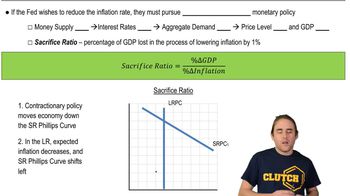
 08:29
08:29