Skip to main content
Microeconomics
나의 코스
배우기
시험 준비
AI 튜터
학습 가이드
플래시카드
탐험해 보세요
앱을 사용해 보세요
나의 코스
배우기
시험 준비
AI 튜터
학습 가이드
플래시카드
탐험해 보세요
앱을 사용해 보세요
뒤로
Shifts in Labor Supply definitions
카드를 뒤집기 위해 탭할 수 있습니다.
Labor Supply
카드를 뒤집기 위해 탭할 수 있습니다.
👆
Labor Supply
Total number of workers available for employment in a specific market at various wage levels.
진행 상황 추적
컨트롤 버튼이 '내비게이션' 모드로 변경되었습니다.
1/15
관련 플래시카드
관련 실천
추천 영상
Shifts in Labor Supply quiz
Shifts in Labor Supply
15 용어
Shifts in Labor Supply
15. Markets for the Factors of Production
10 문제점
주제
Differences in Wages
15. Markets for the Factors of Production
10 문제점
주제
15. Markets for the Factors of Production
10 주제
13 문제점
장
VideoThumbView.guidedCourse
03:47
Shifts in Labor Supply
709
views
4
rank
이 집합의 용어 (15)
하이드의 정의
Labor Supply
Total number of workers available for employment in a specific market at various wage levels.
Population Size
Number of people residing in a country, directly influencing the quantity of available workers.
Supply Curve
Graphical representation showing how the quantity of labor offered changes with wage rates.
Immigration
Movement of people into a country, increasing the pool of potential workers and shifting labor supply.
Demographics
Characteristics of a population, such as age and gender, affecting the composition of the workforce.
Working Age
Age range, typically 18-65, considered eligible for employment and crucial for labor force participation.
Baby Boomers
Generation born post-World War II, whose entry into the workforce significantly expanded labor supply.
Workforce Participation
Proportion of eligible individuals actively engaged in employment or seeking work.
Alternative Opportunities
Other available jobs or markets that can attract workers away from their current employment.
Wage
Monetary compensation received by workers, influencing their decisions to enter or leave labor markets.
Labor Market
Arena where employers seek workers and individuals offer their labor for compensation.
Substitute Occupations
Jobs requiring similar skills, allowing workers to switch between them based on wage differences.
Gender Composition
Distribution of men and women within the workforce, impacting overall labor supply.
Household Structure
Arrangement of family roles, such as homemakers and earners, influencing labor force dynamics.
Labor Force
Group of people either employed or actively seeking employment within an economy.
 뒤로뒤로
뒤로뒤로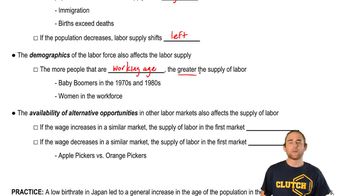
 03:47
03:47