Skip to main content
Microeconomics
나의 코스
배우기
시험 준비
AI 튜터
학습 가이드
플래시카드
탐험해 보세요
앱을 사용해 보세요
나의 코스
배우기
시험 준비
AI 튜터
학습 가이드
플래시카드
탐험해 보세요
앱을 사용해 보세요
뒤로
Taxes, the Multiplier Effect, and Automatic Stabilizers definitions
카드를 뒤집기 위해 탭할 수 있습니다.
Multiplier Effect
카드를 뒤집기 위해 탭할 수 있습니다.
👆
Multiplier Effect
A chain reaction where an initial change in spending or income leads to repeated increases in GDP throughout the economy.
진행 상황 추적
컨트롤 버튼이 '내비게이션' 모드로 변경되었습니다.
1/15
관련 플래시카드
추천 영상
Taxes, the Multiplier Effect, and Automatic Stabilizers quiz
Taxes, the Multiplier Effect, and Automatic Stabilizers
15 용어
VideoThumbView.guidedCourse
05:11
Taxes and the GDP Multiplier
3
views
VideoThumbView.guidedCourse
03:50
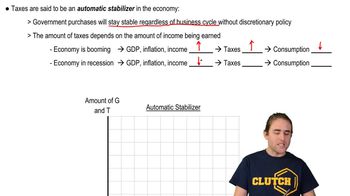
Taxes as an Automatic Stabilizer
4
views
이 집합의 용어 (15)
하이드의 정의
Multiplier Effect
A chain reaction where an initial change in spending or income leads to repeated increases in GDP throughout the economy.
Tax Multiplier
A measure showing how a change in taxes impacts GDP, typically smaller and negative due to the inverse link between taxes and consumption.
Government Spending Multiplier
A value indicating the total increase in GDP from an initial boost in government purchases, usually larger than the tax multiplier.
Disposable Income
The portion of earnings available to households after taxes, used for both consumption and savings.
Consumption
Household spending on goods and services, influenced by changes in disposable income and taxes.
Savings
The part of disposable income not spent, which reduces the magnitude of the multiplier effect.
Aggregate Demand
The total demand for goods and services in an economy, affected by changes in taxes and government spending.
Automatic Stabilizer
A mechanism where taxes adjust with the business cycle, moderating economic fluctuations without new policy actions.
Business Cycle
Recurring periods of economic expansion and recession, influencing tax collection and consumption levels.
Fiscal Policy
Government actions involving taxes and spending to manage aggregate demand and economic stability.
Expansion
A phase of the business cycle marked by rising GDP, income, and tax collection, often reducing household consumption.
Recession
A period of declining GDP and income, leading to lower taxes and increased household consumption.
Equilibrium GDP
The level of output where aggregate demand equals aggregate supply, altered by changes in taxes or government spending.
Discretionary Policy
Deliberate government interventions to change spending or taxes, distinct from automatic stabilizers.
Chain Reaction
A process where increased spending or income triggers further rounds of consumption and economic activity.
 뒤로뒤로
뒤로뒤로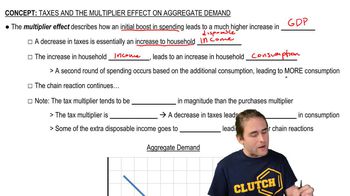
 05:11
05:11