Skip to main content
Microeconomics
나의 코스
배우기
시험 준비
AI 튜터
학습 가이드
플래시카드
탐험해 보세요
앱을 사용해 보세요
나의 코스
배우기
시험 준비
AI 튜터
학습 가이드
플래시카드
탐험해 보세요
앱을 사용해 보세요
뒤로
Shifts of Demand and Supply in Microeconomics
카드를 뒤집기 위해 탭할 수 있습니다.
What causes a shift in the demand curve?
카드를 뒤집기 위해 탭할 수 있습니다.
👆
What causes a shift in the demand curve?
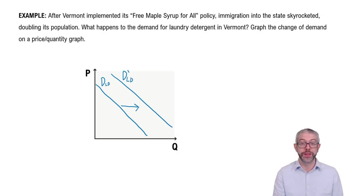
A shift in demand occurs when a non-price factor changes, such as income, tastes, prices of related goods, expectations, or number of buyers.
진행 상황 추적
컨트롤 버튼이 '내비게이션' 모드로 변경되었습니다.
1/20
추천 영상
01:30
Consumer Income: Normal Goods and Inferior Goods
151
views
2
rank
01:44
Consumer Preferences
170
views
4
rank
02:15
Number of Consumers
157
views
4
rank
이 집합의 용어 (20)
하이드의 정의
What causes a shift in the demand curve?
A shift in demand occurs when a non-price factor changes, such as income, tastes, prices of related goods, expectations, or number of buyers.
What causes a shift in the supply curve?
A shift in supply happens due to changes in input prices, technology, expectations, number of sellers, or government policies.
Difference between a movement along the demand curve and a shift of the demand curve
A movement along the demand curve is caused by a change in the good's own price; a shift is caused by changes in other factors affecting demand.
Effect of an increase in consumer income on demand for a normal good
An increase in income shifts the demand curve for a normal good to the right, indicating higher quantity demanded at each price.
Effect of an increase in consumer income on demand for an inferior good
An increase in income shifts the demand curve for an inferior good to the left, indicating lower quantity demanded at each price.
How do prices of substitutes affect demand?
An increase in the price of a substitute good shifts demand for the original good to the right.
How do prices of complements affect demand?
An increase in the price of a complement good shifts demand for the original good to the left.
Impact of technological improvement on supply
Technological improvements shift the supply curve to the right by reducing production costs and increasing quantity supplied at each price.
Effect of an increase in input prices on supply
An increase in input prices shifts the supply curve to the left, reducing quantity supplied at each price.
What happens to supply when the number of sellers increases?
An increase in the number of sellers shifts the supply curve to the right, increasing total quantity supplied.
How do expectations of future prices affect supply today?
If sellers expect higher future prices, current supply may decrease, shifting the supply curve to the left.
What is the result of a rightward shift in demand with supply constant?
A rightward shift in demand increases equilibrium price and quantity.
What is the result of a leftward shift in supply with demand constant?
A leftward shift in supply increases equilibrium price but decreases equilibrium quantity.
How does a simultaneous rightward shift in demand and supply affect equilibrium?
Equilibrium quantity increases; price effect depends on the relative magnitude of shifts.
How does a simultaneous leftward shift in demand and supply affect equilibrium?
Equilibrium quantity decreases; price effect depends on the relative magnitude of shifts.
What is a non-price determinant of demand?
Factors other than price that affect demand, such as income, tastes, prices of related goods, expectations, and number of buyers.
What is a non-price determinant of supply?
Factors other than price that affect supply, including input prices, technology, expectations, number of sellers, and government policies.
Why does a supply curve slope upward?
Because higher prices incentivize producers to supply more, reflecting increasing marginal costs.
Why does a demand curve slope downward?
Because consumers buy more at lower prices due to the substitution and income effects.
What happens to equilibrium when demand decreases and supply increases?
Equilibrium quantity effect is ambiguous; equilibrium price decreases.
 뒤로뒤로
뒤로뒤로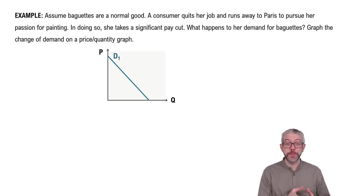
 01:30
01:30