Skip to main content
Nutrition
나의 코스
배우기
시험 준비
AI 튜터
학습 가이드
플래시카드
앱을 사용해 보세요
나의 코스
배우기
시험 준비
AI 튜터
학습 가이드
플래시카드
앱을 사용해 보세요
뒤로
Blood Glucose Regulation definitions
카드를 뒤집기 위해 탭할 수 있습니다.
Blood Glucose
카드를 뒤집기 위해 탭할 수 있습니다.
👆
Blood Glucose
Concentration of sugar in the bloodstream, tightly regulated to supply energy and prevent health complications.
진행 상황 추적
컨트롤 버튼이 '내비게이션' 모드로 변경되었습니다.
1/15
관련 플래시카드
관련 실천
추천 영상
Blood Glucose Regulation quiz
Blood Glucose Regulation
15 용어
Blood Glucose Regulation exam
Blood Glucose Regulation
29 용어
Blood Glucose Regulation
4. Carbohydrates
10 문제점
주제
Diabetes
4. Carbohydrates
10 문제점
주제
4. Carbohydrates
9 주제
15 문제점
장
VideoThumbView.guidedCourse
03:15
Glucagon Increases Blood Glucose Levels
265
views
1
rank
VideoThumbView.guidedCourse
02:45
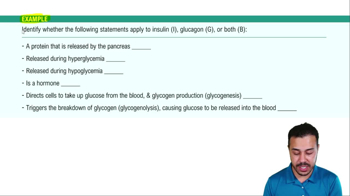
Blood Glucose Regulation Example 1
212
views
4
rank
VideoThumbView.guidedCourse
02:15
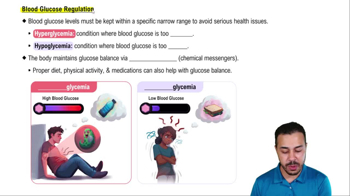
Blood Glucose Regulation
264
views
3
rank
이 집합의 용어 (15)
하이드의 정의
Blood Glucose
Concentration of sugar in the bloodstream, tightly regulated to supply energy and prevent health complications.
Hyperglycemia
Condition marked by excessively high blood sugar, risking dehydration, organ damage, and infections.
Hypoglycemia
Condition of abnormally low blood sugar, leading to symptoms like dizziness, confusion, and possible unconsciousness.
Insulin
Hormone secreted by the pancreas that lowers blood sugar by promoting cellular glucose uptake and storage.
Glucagon
Hormone released by the pancreas that raises blood sugar by stimulating glucose production and release.
Pancreas
Organ responsible for secreting hormones that regulate blood sugar, including insulin and glucagon.
Glycogenesis
Process of forming glycogen from excess glucose, primarily in the liver and muscles, for energy storage.
Glycogenolysis
Breakdown of stored glycogen into glucose, mainly in the liver, to increase blood sugar during fasting.
Gluconeogenesis
Synthesis of new glucose molecules from non-carbohydrate sources, such as proteins, to maintain blood sugar.
Lipogenesis
Conversion of excess glucose into fats, which are then stored in adipose tissue for long-term energy.
Lipolysis
Breakdown of fats in adipose tissue, releasing fatty acids into the bloodstream for energy during low glucose.
Glucose Transporters
Proteins in cell membranes that facilitate the entry of glucose from the blood into cells.
Adipose Tissue
Body tissue specialized for storing fat, serving as an energy reserve and site for lipid metabolism.
Glycogen
Polysaccharide stored mainly in the liver and muscles, serving as a readily mobilized glucose reserve.
Chemical Messengers
Molecules, such as hormones, that transmit signals to regulate physiological processes like blood sugar control.
 뒤로뒤로
뒤로뒤로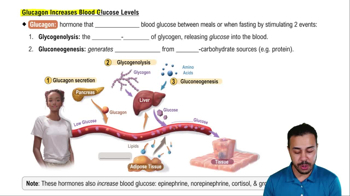
 03:15
03:15