Skip to main content
Nutrition
나의 코스
배우기
시험 준비
AI 튜터
학습 가이드
플래시카드
앱을 사용해 보세요
나의 코스
배우기
시험 준비
AI 튜터
학습 가이드
플래시카드
앱을 사용해 보세요
뒤로
Dietary Guidelines for Lipids quiz
카드를 뒤집기 위해 탭할 수 있습니다.
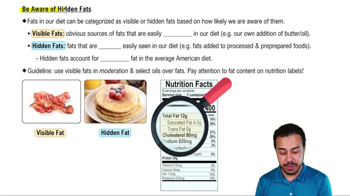
What is the difference between visible and hidden fats in the diet?
카드를 뒤집기 위해 탭할 수 있습니다.
👆
What is the difference between visible and hidden fats in the diet?
Visible fats are easily seen, like butter or bacon fat, while hidden fats are not obvious and are often found in processed or prepared foods.
진행 상황 추적
컨트롤 버튼이 '내비게이션' 모드로 변경되었습니다.
1/15
관련 플래시카드
관련 실천
추천 영상
Dietary Guidelines for Lipids definitions
Dietary Guidelines for Lipids
15 용어
Dietary Guidelines for Lipids exam
Dietary Guidelines for Lipids
29 용어
Dietary Guidelines for Lipids quiz #1
Dietary Guidelines for Lipids
10 용어
Dietary Guidelines for Lipids
5. Lipids
10 문제점
주제
Cardiovascular Disease
5. Lipids
10 문제점
주제
5. Lipids
6 주제
15 문제점
장
VideoThumbView.guidedCourse
04:37
Recommended Dietary Guidelines: Lipids
202
views
1
rank
VideoThumbView.guidedCourse
02:31
Be Aware of Hidden Fats
220
views
1
rank
VideoThumbView.guidedCourse
02:04
Dietary Guidelines for Lipids Example 2
176
views
1
rank
이 집합의 용어 (15)
하이드의 정의
What is the difference between visible and hidden fats in the diet?
Visible fats are easily seen, like butter or bacon fat, while hidden fats are not obvious and are often found in processed or prepared foods.
Why are hidden fats a concern in the average American diet?
Hidden fats account for most of the fat consumed and are often overlooked, leading to unintentional overconsumption.
What is the Acceptable Macronutrient Distribution Range (AMDR) for fat intake?
The AMDR recommends that 20-35% of your total daily energy intake should come from fats.
What is the recommended limit for saturated fat intake according to dietary guidelines?
Saturated fat intake should be limited to less than 10% of your total daily energy intake.
Why should you limit your intake of saturated fats?
Overconsumption of saturated fats is linked to an increased risk of developing cardiovascular diseases.
Is dietary cholesterol essential in the human diet? Why or why not?
No, because the liver can synthesize all the cholesterol the body needs.
What is the precautionary guideline for dietary cholesterol intake?
It is recommended to limit dietary cholesterol to less than 300 mg per day, mainly because foods high in cholesterol are also high in saturated fats.
What type of fats should you avoid at all costs and why?
Trans fats should be avoided because they greatly increase the risk of cardiovascular diseases.
What should you replace saturated fats with in your diet?
Replace saturated fats with unsaturated fats and liquid oils, such as olive oil.
Name two food groups that are good sources of unsaturated fats.
Nuts and seeds, and fish are good sources of unsaturated fats.
What are the recommended minimum daily intakes for linoleic acid and alpha-linolenic acid for adults?
Adults should consume at least 11-14 grams of linoleic acid (omega-6) and 1.1-1.3 grams of alpha-linolenic acid (omega-3) per day.
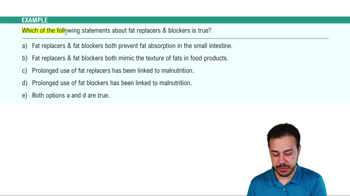
What are fat replacers and how do they work?
Fat replacers mimic the texture and function of fat, allowing foods to have less fat and fewer calories.
What is a potential risk of using fat blockers for weight loss?
Fat blockers can also block the absorption of fat-soluble vitamins (A, D, E, K), potentially leading to malnutrition.
Why should fat replacers and fat blockers be used cautiously?
Their long-term effects are uncertain, and overuse can lead to malnutrition and digestive side effects.
What is the recommended approach for effective weight management according to the guidelines?
Prioritize a balanced diet and increased physical activity over relying on fat replacers or blockers.
 뒤로뒤로
뒤로뒤로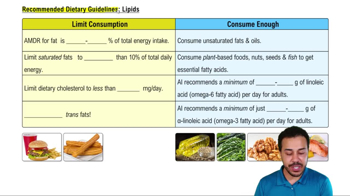
 04:37
04:37