Skip to main content
Nutrition
나의 코스
배우기
시험 준비
AI 튜터
학습 가이드
플래시카드
앱을 사용해 보세요
나의 코스
배우기
시험 준비
AI 튜터
학습 가이드
플래시카드
앱을 사용해 보세요
뒤로
Dietary Guidelines for Proteins definitions
카드를 뒤집기 위해 탭할 수 있습니다.
Recommended Dietary Allowance
카드를 뒤집기 위해 탭할 수 있습니다.
👆
Recommended Dietary Allowance
Minimum daily intake level set to meet the protein needs of most healthy adults, calculated as 0.8 grams per kilogram of body weight.
진행 상황 추적
컨트롤 버튼이 '내비게이션' 모드로 변경되었습니다.
1/17
관련 플래시카드
관련 실천
추천 영상
Dietary Guidelines for Proteins quiz
Dietary Guidelines for Proteins
15 용어
Dietary Guidelines for Proteins exam
Dietary Guidelines for Proteins
30 용어
Dietary Guidelines for Proteins
6. Proteins
10 문제점
주제
Protein-Related Disorders
6. Proteins
10 문제점
주제
6. Proteins
7 주제
15 문제점
장
VideoThumbView.guidedCourse
03:02
Dietary Guidelines for Proteins Example 1
150
views
VideoThumbView.guidedCourse
05:16
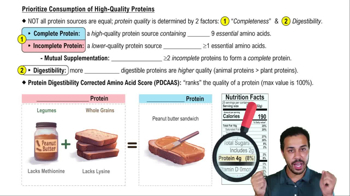
Prioritize Consumption of High-Quality Proteins
159
views
2
rank
VideoThumbView.guidedCourse
04:23
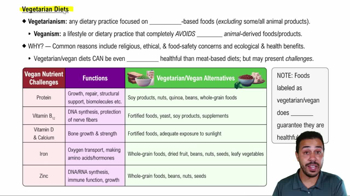
Vegetarian Diets
186
views
이 집합의 용어 (17)
하이드의 정의
Recommended Dietary Allowance
Minimum daily intake level set to meet the protein needs of most healthy adults, calculated as 0.8 grams per kilogram of body weight.
Acceptable Macronutrient Distribution Range
Guideline suggesting the percentage range of daily calories that should come from protein, typically 10–35%.
Nitrogen Balance
State where nitrogen intake equals nitrogen excretion, indicating protein needs are being met for healthy adults.
Positive Nitrogen Balance
Condition where nitrogen intake exceeds excretion, associated with growth, pregnancy, or muscle building.
Negative Nitrogen Balance
State where nitrogen excretion surpasses intake, often seen during illness, infection, or starvation.
Essential Amino Acids
Nine building blocks of protein that must be obtained from the diet because the body cannot synthesize them.
Nonessential Amino Acids
Amino acids that the body can produce internally, so dietary intake is not required under normal conditions.
Conditionally Essential Amino Acids
Amino acids usually synthesized by the body but required from the diet during illness, stress, or rapid growth.
Limiting Amino Acid
The essential amino acid present in the lowest amount in a food, restricting protein synthesis efficiency.
Transamination
Biochemical process transferring an amino group to form nonessential amino acids from other molecules.
Protein Quality
Measure based on completeness and digestibility, indicating how well a protein source meets amino acid needs.
Complete Protein
Food source containing all nine essential amino acids in sufficient amounts, typically animal-based.
Incomplete Protein
Protein source lacking one or more essential amino acids, often found in plant-based foods.
Mutual Supplementation
Strategy of combining different incomplete protein sources to provide all essential amino acids.
Protein Digestibility Corrected Amino Acid Score
Scoring system evaluating protein quality by considering both amino acid profile and digestibility, with a maximum of 100%.
Vegetarianism
Dietary practice emphasizing plant-based foods and excluding some or all animal products, with various subtypes.
Veganism
Strict form of vegetarianism that excludes all animal-derived foods and products, requiring careful nutrient planning.
 뒤로뒤로
뒤로뒤로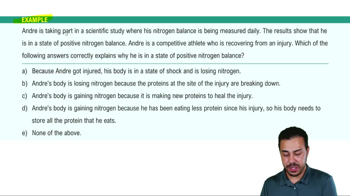
 03:02
03:02