Skip to main content
Nutrition
나의 코스
배우기
시험 준비
AI 튜터
학습 가이드
플래시카드
앱을 사용해 보세요
나의 코스
배우기
시험 준비
AI 튜터
학습 가이드
플래시카드
앱을 사용해 보세요
뒤로
Eating Disorders exam
카드를 뒤집기 위해 탭할 수 있습니다.
What is body image?
카드를 뒤집기 위해 탭할 수 있습니다.
👆
What is body image?
Body image is the sum of thoughts, feelings, and perceptions about one's own body.
진행 상황 추적
컨트롤 버튼이 '내비게이션' 모드로 변경되었습니다.
1/30
관련 플래시카드
관련 실천
추천 영상
Eating Disorders definitions
Eating Disorders
15 용어
Eating Disorders quiz
Eating Disorders
15 용어
Eating Disorders
10. Energy Balance: Body Weight, Obesity, & Eating Disorders
10 문제점
주제
Gaining Weight
10. Energy Balance: Body Weight, Obesity, & Eating Disorders
10 문제점
주제
10. Energy Balance: Body Weight, Obesity, & Eating Disorders
8 주제
15 문제점
장
05:55
Body Image and Eating
186
views
1
rank
02:46
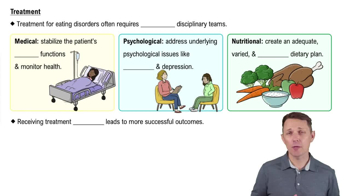
Treatment
112
views
04:15
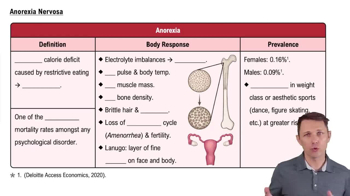
Anorexia Nervosa
170
views
이 집합의 용어 (30)
하이드의 정의
What is body image?
Body image is the sum of thoughts, feelings, and perceptions about one's own body.
Disordered Eating
A broad term for atypical and unhealthy eating behaviors that do not meet clinical criteria for an eating disorder.
What is body dysmorphia?
A persistent, unhealthy preoccupation with perceived flaws in one's body.
Name three major eating disorders.
Anorexia nervosa, bulimia nervosa, and binge eating disorder.
What is the difference between disordered eating and an eating disorder?
Disordered eating refers to unhealthy behaviors without clinical diagnosis; eating disorders are clinically defined psychological conditions.
Anorexia Nervosa
A severe calorie deficit caused by restrictive eating, leading to self-imposed starvation.
What is the most common eating disorder in the United States?
Binge eating disorder.
Bulimia Nervosa
Repeated episodes of binging followed by purging to avoid weight gain.
What is binging?
Eating a very large quantity of food in a short period of time.
What is purging?
A compensatory behavior to avoid weight gain, such as self-induced vomiting, laxative use, or excessive exercise.
Binge Eating Disorder
Repeated episodes of binging without purging.
What are some health risks of anorexia nervosa?
Electrolyte imbalances, decreased pulse and body temp, muscle loss, osteoporosis, brittle hair/nails, amenorrhea, and lanugo.
What is lanugo?
A layer of fine, soft hair that grows on the body in response to low body temperature from starvation.
Which eating disorder has the highest mortality rate?
Anorexia nervosa.
What are common causes of eating disorders?
Sociocultural pressures, psychological issues (depression, anxiety, OCD), and genetic predisposition.
What is amenorrhea?
Loss of the menstrual cycle, often due to inadequate nutrition.
How does bulimia nervosa affect the body?
Can cause damage to the GI tract, mouth, teeth, electrolyte imbalances, and constipation from laxative abuse.
What is the primary difference between bulimia nervosa and binge eating disorder?
Bulimia involves purging after binging; binge eating disorder does not involve purging.
Who is at higher risk for anorexia nervosa?
Athletes in weight-class or aesthetic sports, and females, especially teens and young adults.
What is the role of college health centers in eating disorders?
They are excellent resources for students struggling with disordered eating or eating disorders.
Why is early intervention important in eating disorders?
Early treatment leads to better health outcomes and higher chances of recovery.
What is the prevalence of eating disorders in the U.S.?
About 9% of Americans will struggle with an eating disorder in their lifetime.
What is the main focus of eating disorder treatment?
Addressing underlying psychological issues with a multidisciplinary team.
Can disordered eating evolve into an eating disorder?
Yes, disordered eating can quickly develop into a diagnosable eating disorder.
What are some physical effects of binge eating disorder?
Obesity, hypertension, heart disease, and type 2 diabetes.
Is nutritional advice alone sufficient to treat eating disorders?
No, psychological treatment is essential; nutrition support is part of a comprehensive plan.
What psychological conditions are often associated with eating disorders?
Depression, anxiety, obsessive-compulsive disorder, and sometimes alcohol use disorder.
What is the prevalence of bulimia nervosa in females compared to males?
Bulimia is about six times more common in females than in males.
What is osteoporosis and how is it related to eating disorders?
Osteoporosis is decreased bone density, often resulting from inadequate nutrition in eating disorders.
What is the first step in treating severe cases of anorexia nervosa?
Stabilizing the patient's vital functions and addressing immediate medical risks.
 뒤로뒤로
뒤로뒤로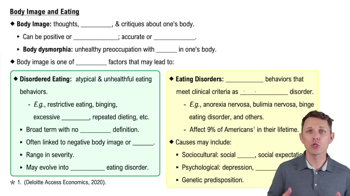
 05:55
05:55