Skip to main content
Nutrition
나의 코스
배우기
시험 준비
AI 튜터
학습 가이드
플래시카드
앱을 사용해 보세요
나의 코스
배우기
시험 준비
AI 튜터
학습 가이드
플래시카드
앱을 사용해 보세요
뒤로
Energy Balance exam
카드를 뒤집기 위해 탭할 수 있습니다.
Energy Balance
카드를 뒤집기 위해 탭할 수 있습니다.
👆
Energy Balance
The relationship between calories consumed (intake) and calories expended (output).
진행 상황 추적
컨트롤 버튼이 '내비게이션' 모드로 변경되었습니다.
1/30
관련 플래시카드
관련 실천
추천 영상
Energy Balance definitions
Energy Balance
15 용어
Energy Balance quiz
Energy Balance
15 용어
Energy Balance quiz #1
Energy Balance
14 용어
Energy Balance
10. Energy Balance: Body Weight, Obesity, & Eating Disorders
10 문제점
주제
Assessing Weight Related Health Risk
10. Energy Balance: Body Weight, Obesity, & Eating Disorders
10 문제점
주제
10. Energy Balance: Body Weight, Obesity, & Eating Disorders
8 주제
15 문제점
장
04:22
Energy Balance
314
views
3
rank
01:04
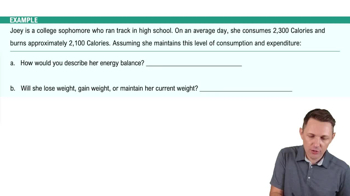
Energy Balance Example 1
187
views
3
rank
06:46
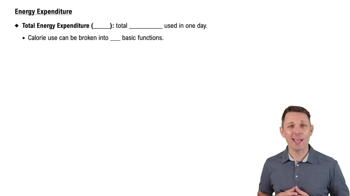
Energy Expenditure
225
views
2
rank
이 집합의 용어 (30)
하이드의 정의
Energy Balance
The relationship between calories consumed (intake) and calories expended (output).
What happens if calorie intake equals calorie expenditure?
Body weight is maintained.
Basal Metabolic Rate (BMR)
The energy used for basic body functions at rest, such as breathing and cell processes.
What is a positive energy balance?
Calorie intake exceeds calorie expenditure, leading to weight gain.
Thermic Effect of Food (TEF)
The energy required to digest, absorb, and metabolize food.
How many calories per gram are in fat?
9 calories per gram.
What is a negative energy balance?
Calorie expenditure exceeds intake, resulting in weight loss.
Physical Activity
Energy expended through movement, including both exercise and daily activities.
What percentage of total energy expenditure does BMR typically account for?
50-80%.
Non-Exercise Activity Thermogenesis (NEAT)
Calories burned through non-exercise movements like standing, fidgeting, and chores.
How many calories per gram are in carbohydrates?
4 calories per gram.
What factors influence BMR?
Body size, body composition, sex, age, calorie intake, and individual variation.
Exercise Activity Thermogenesis (EAT)
Calories burned specifically during intentional exercise.
How many calories per gram are in protein?
4 calories per gram.
What is Total Energy Expenditure (TEE)?
The total number of calories used by the body in a day.
How many calories per gram are in alcohol?
7 calories per gram.
What is the thermic effect of food as a percentage of energy use?
About 5-15%.
What is the main source of variation in BMR?
Body size (mass).
What is the typical range for energy used in physical activity (EAT + NEAT)?
15-50% of total energy expenditure.
Why is calculating calorie expenditure more complex than intake?
It varies by genetics, age, hormones, and activity, making it harder to estimate.
What is the energy balance equation?
Calories in (intake) minus calories out (expenditure).
What happens to BMR with age?
BMR decreases, especially after age 65.
What is the effect of very low calorie intake on BMR?
It reduces BMR as the body adapts to lower energy availability.
Which macronutrient requires the most energy to process?
Protein.
What is the main challenge in tracking energy intake?
Accurately estimating calories in home-cooked meals and restaurant foods.
What is the main challenge in tracking energy expenditure?
Individual differences and changes over time make it difficult to calculate.
What is the role of water in food weight?
Water adds weight but does not contribute calories.
How do processed foods affect TEF?
Processed foods usually require less energy to digest than whole foods.
What is the effect of lean body mass on BMR?
More lean body mass increases BMR.
What is the abbreviation for total calories used in a day?
TEE (Total Energy Expenditure).
 뒤로뒤로
뒤로뒤로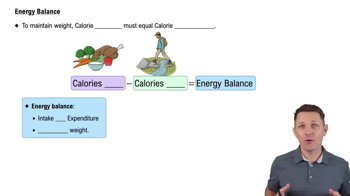
 04:22
04:22