Skip to main content
Nutrition
나의 코스
배우기
시험 준비
AI 튜터
학습 가이드
플래시카드
앱을 사용해 보세요
나의 코스
배우기
시험 준비
AI 튜터
학습 가이드
플래시카드
앱을 사용해 보세요
뒤로
Food Preservation & Additives definitions
카드를 뒤집기 위해 탭할 수 있습니다.
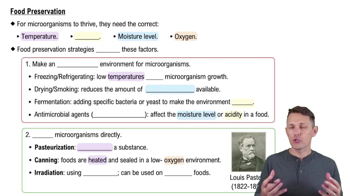
Microorganisms
카드를 뒤집기 위해 탭할 수 있습니다.
👆
Microorganisms
Tiny living entities such as bacteria and yeast that cause food spoilage and are targeted by preservation methods.
진행 상황 추적
컨트롤 버튼이 '내비게이션' 모드로 변경되었습니다.
1/15
관련 플래시카드
관련 실천
추천 영상
Food Preservation & Additives quiz
Food Preservation & Additives
15 용어
Food Preservation & Additives
12. Food Safety & Regulation
10 문제점
주제
U.S. Food Safety Systems
12. Food Safety & Regulation
10 문제점
주제
12. Food Safety & Regulation
6 주제
15 문제점
장
01:45
Food Preservation & Additives Example 2
85
views
1
comments
04:45
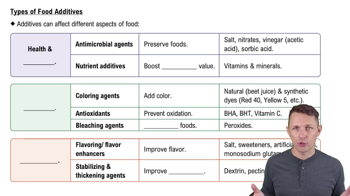
Types of Food Additives
101
views
06:06
Food Preservation
106
views
이 집합의 용어 (15)
하이드의 정의
Microorganisms
Tiny living entities such as bacteria and yeast that cause food spoilage and are targeted by preservation methods.
Shelf Life
The duration food remains safe and suitable for consumption, extended by preservation techniques and additives.
Refrigeration
A preservation method that slows microbial growth by maintaining food at low temperatures above freezing.
Fermentation
A process using specific bacteria or yeast to increase acidity, making food inhospitable to most spoilage organisms.
Pasteurization
A heat treatment that kills harmful microbes in food without cooking it, followed by rapid cooling and sealing.
Canning
A preservation technique involving heating food to kill microbes, then sealing it in a low-oxygen environment.
Irradiation
A method using radiation, such as X-rays, to eliminate pathogens in food without making it radioactive.
Preservatives
Substances added to food to inhibit microbial growth, often by altering moisture or acidity, extending edibility.
Food Additives
Regulated substances incorporated into foods to enhance safety, nutrition, color, flavor, or texture.
GRAS
A regulatory status for substances with scientific consensus of safety, allowing use without extensive new testing.
Antioxidants
Compounds that prevent oxidation, helping maintain food color and freshness by inhibiting browning reactions.
Coloring Agents
Natural or synthetic substances added to foods to impart or enhance visual appeal.
Flavor Enhancers
Additives, such as MSG, that intensify or improve the taste profile of foods, especially savory notes.
Stabilizing Agents
Ingredients that improve food texture by thickening or maintaining uniform consistency, such as pectin or gums.
FDA
The U.S. agency responsible for regulating and approving the safety and use of food additives.
 뒤로뒤로
뒤로뒤로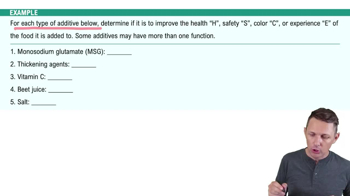
 01:45
01:45