Skip to main content
Nutrition
나의 코스
배우기
시험 준비
AI 튜터
학습 가이드
플래시카드
앱을 사용해 보세요
나의 코스
배우기
시험 준비
AI 튜터
학습 가이드
플래시카드
앱을 사용해 보세요
뒤로
Healthy Weight exam
카드를 뒤집기 위해 탭할 수 있습니다.
What is energy balance?
카드를 뒤집기 위해 탭할 수 있습니다.
👆
What is energy balance?
The relationship between calories consumed and calories expended to maintain body weight.
진행 상황 추적
컨트롤 버튼이 '내비게이션' 모드로 변경되었습니다.
1/26
관련 플래시카드
관련 실천
추천 영상
Healthy Weight definitions
Healthy Weight
15 용어
Healthy Weight quiz
Healthy Weight
15 용어
Healthy Weight quiz #1
Healthy Weight
10 용어
Healthy Weight
10. Energy Balance: Body Weight, Obesity, & Eating Disorders
10 문제점
주제
Energy Balance
10. Energy Balance: Body Weight, Obesity, & Eating Disorders
10 문제점
주제
10. Energy Balance: Body Weight, Obesity, & Eating Disorders
8 주제
15 문제점
장
05:02
Weight and Health
238
views
3
rank
02:34
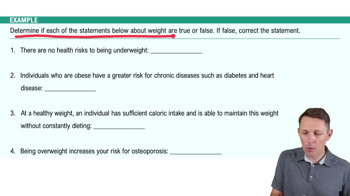
Healthy Weight Example 1
182
views
6
rank
이 집합의 용어 (26)
하이드의 정의
What is energy balance?
The relationship between calories consumed and calories expended to maintain body weight.
Healthy weight
A weight range appropriate for age, height, and sex, associated with decreased risk of chronic diseases.
Why is there no single healthy weight for everyone?
Because healthy weight depends on individual factors like age, height, and sex.
Overweight
A weight category where excess calories are consumed, increasing risk of chronic diseases.
What chronic diseases are associated with being overweight?
Type 2 diabetes, heart disease, hypertension, and some cancers.
Obesity
A condition of continued excess calorie intake, greatly increasing risk of chronic diseases and mortality.
How does being obese affect mortality risk?
It increases the risk of death due to higher chances of chronic diseases.
Underweight
A state of insufficient calorie intake for body size, leading to health risks.
What are potential consequences of being underweight?
Nutritional deficiencies, impaired body functions, osteoporosis, and compromised immune function.
How does being underweight affect the immune system?
It can compromise immune function, making the body more susceptible to illness.
What is the main goal of maintaining a healthy weight?
To lower the risk of chronic diseases and promote overall well-being.
How should a healthy weight be maintained?
Through sustainable lifestyle changes and proper nutrition, not constant dieting.
What is the risk of constant dieting to maintain weight?
It can lead to unhealthy choices and an inherently unhealthy weight.
What is the relationship between weight categories and disease risk?
Moving away from healthy weight (either up or down) increases disease risk.
BMI
A measure used to define weight categories based on height and weight.
What happens as you move further into the overweight or obese categories?
The risk of chronic diseases and mortality increases.
What happens as you move further below a healthy weight?
The risk of nutritional deficiencies and impaired body functions increases.
Why is energy balance important?
It helps achieve and maintain a healthy weight, reducing disease risk.
What is a key characteristic of a healthy weight?
It can be maintained without constant dieting.
What is the main concern with defining weight categories?
Their association with different levels of disease risk.
How does excess calorie intake affect health?
It leads to overweight or obesity, increasing risk of chronic diseases.
What is a risk of being severely underweight?
Increased risk of death.
How do lifestyle and nutritional choices impact weight?
They help achieve and maintain a healthy weight, reducing disease risk.
What is osteoporosis?
A condition of weakened bones, often linked to being underweight and nutritional deficiencies.
What is the primary focus when discussing healthy weight in nutrition?
Reducing the risk of chronic, weight-related diseases.
What is the effect of taking in insufficient calories?
It can impair body functions and increase risk of deficiencies.
 뒤로뒤로
뒤로뒤로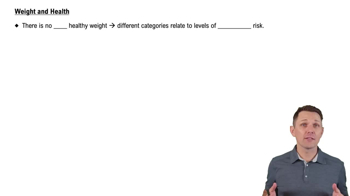
 05:02
05:02