Skip to main content
Nutrition
나의 코스
배우기
시험 준비
AI 튜터
학습 가이드
플래시카드
앱을 사용해 보세요
나의 코스
배우기
시험 준비
AI 튜터
학습 가이드
플래시카드
앱을 사용해 보세요
뒤로
Major Mineral: Chloride, Magnesium, & Sulfur definitions
카드를 뒤집기 위해 탭할 수 있습니다.
Chloride
카드를 뒤집기 위해 탭할 수 있습니다.
👆
Chloride
A major extracellular electrolyte essential for water balance, blood pH buffering, and a component of stomach acid.
진행 상황 추적
컨트롤 버튼이 '내비게이션' 모드로 변경되었습니다.
1/15
관련 플래시카드
관련 실천
추천 영상
Major Mineral: Chloride, Magnesium, & Sulfur quiz
Major Mineral: Chloride, Magnesium, & Sulfur
15 용어
Major Mineral: Chloride, Magnesium, & Sulfur exam
Major Mineral: Chloride, Magnesium, & Sulfur
30 용어
Major Mineral: Chloride, Magnesium, & Sulfur quiz #1
Major Mineral: Chloride, Magnesium, & Sulfur
10 용어
Major Mineral: Chloride, Magnesium, & Sulfur
8. Water and Minerals
10 문제점
주제
Trace minerals: Iron and Copper
8. Water and Minerals
10 문제점
주제
8. Water and Minerals
10 주제
15 문제점
장
01:25
Major Mineral: Chloride, Magnesium, & Sulfur Example 1
110
views
2
rank
02:03
Sulfur (S)
130
views
1
rank
04:24
Magnesium (Mg)
176
views
1
rank
이 집합의 용어 (15)
하이드의 정의
Chloride
A major extracellular electrolyte essential for water balance, blood pH buffering, and a component of stomach acid.
Extracellular Electrolyte
An ion present outside cells, crucial for fluid balance and electrical signaling in the body.
Sodium Chloride
A compound commonly known as table salt, serving as the primary dietary source of both sodium and chloride.
Hydrochloric Acid
A strong acid in the stomach, vital for digestion, with chloride as a key component.
Adequate Intake
A recommended daily nutrient amount set to ensure sufficient intake for most healthy individuals.
Tolerable Upper Limit
The maximum daily intake unlikely to cause adverse health effects in the general population.
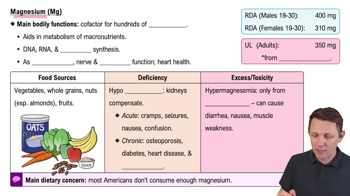
Magnesium
A major mineral acting as a cofactor for hundreds of enzymes, supporting metabolism, nerve, and muscle function.
Cofactor
A non-protein chemical compound required for enzyme activity, often a mineral like magnesium.
Macronutrient Metabolism
The biochemical processes that break down carbohydrates, proteins, and fats for energy and cellular function.
Protein Synthesis
The cellular process of building proteins from amino acids, requiring minerals like magnesium and sulfur.
Hypomagnesemia
A deficiency state marked by low magnesium levels, potentially causing cramps, seizures, and confusion.
Hypermagnesemia
A condition of excess magnesium, usually from supplements, leading to diarrhea, nausea, and muscle weakness.
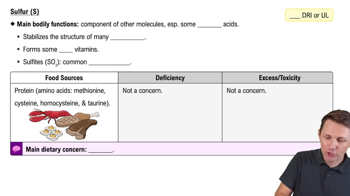
Sulfur
A major mineral found in certain amino acids, crucial for stabilizing protein structures and forming some B vitamins.
Amino Acids
Organic compounds serving as protein building blocks, some of which contain sulfur for structural stability.
Sulfites
Chemical preservatives containing sulfur, generally safe except for individuals with specific sensitivities.
 뒤로뒤로
뒤로뒤로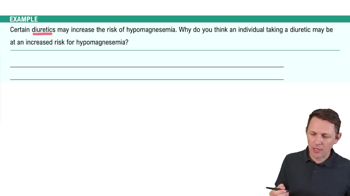
 01:25
01:25