Skip to main content
Nutrition
나의 코스
배우기
시험 준비
AI 튜터
학습 가이드
플래시카드
앱을 사용해 보세요
나의 코스
배우기
시험 준비
AI 튜터
학습 가이드
플래시카드
앱을 사용해 보세요
뒤로
Nutrients exam
1 학생이 이 점이 도움이 되었다고 느꼈습니다
카드를 뒤집기 위해 탭할 수 있습니다.
What is a nutrient?
카드를 뒤집기 위해 탭할 수 있습니다.
👆
What is a nutrient?
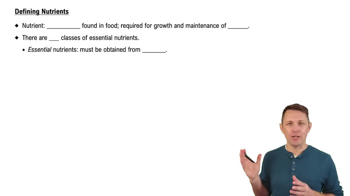
A chemical compound in food required for growth and maintenance of life.
진행 상황 추적
컨트롤 버튼이 '내비게이션' 모드로 변경되었습니다.
1/29
관련 플래시카드
관련 실천
추천 영상
Nutrients definitions
Nutrients
15 용어
Nutrients quiz
Nutrients
15 용어
Nutrients
1. Science of Nutrition
10 문제점
주제
Macronutrients
1. Science of Nutrition
10 문제점
주제
1. Science of Nutrition
8 주제
15 문제점
장
06:17
Nutrients and Disease
1035
views
40
rank
04:21
Defining Nutrients
1893
views
118
rank
02:23
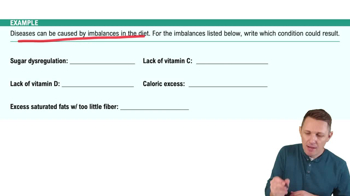
Nutrients Example 2
710
views
25
rank
이 집합의 용어 (29)
하이드의 정의
What is a nutrient?
A chemical compound in food required for growth and maintenance of life.
Macronutrients
Nutrients required in large amounts that provide energy through cellular metabolism.
What are the six classes of essential nutrients?
Carbohydrates, lipids, proteins, vitamins, minerals, and water.
Micronutrients
Nutrients required in small amounts that do not provide energy but aid in physiological functions.
What does 'essential nutrient' mean?
A nutrient that must be obtained from food because the body cannot make it.
Carbohydrates
A macronutrient that provides energy and is an organic molecule.
What is the main function of macronutrients?
To provide energy for the body.
Lipids (Fats)
A macronutrient that provides energy and is an organic molecule.
Proteins
A macronutrient needed for growth, repair, and maintenance; also an organic molecule.
What are the two categories of micronutrients?
Vitamins and minerals.
Vitamins
Organic micronutrients required in small amounts for various physiological functions.
Minerals
Inorganic micronutrients required in small amounts for physiological functions.
Water
An essential nutrient required for virtually all physiological functions; inorganic.
What is the difference between organic and inorganic nutrients?
Organic nutrients contain carbon; inorganic nutrients do not.
Which nutrients are considered organic molecules?
Carbohydrates, lipids, proteins, and vitamins.
Which nutrients are inorganic?
Minerals and water.
What is a nutritious diet?
A diet that meets all nutrient requirements without excess, promoting health.
What can result from a deficiency of vitamin C?
Scurvy, characterized by bleeding gums and tooth loss.
Pellagra
A disease caused by vitamin B3 (niacin) deficiency, leading to rashes and other symptoms.
Rickets
A disease caused by vitamin D deficiency, resulting in bone deformities in children.
What is obesity?
Being overweight to the extent that it can cause serious health problems.
What causes obesity?
Caloric excess—consuming more energy than the body uses.
Diabetes
A disease involving sugar dysregulation, where the body cannot control blood glucose levels.
What are common dietary excesses in the American diet?
Too many calories, added sugars, sodium, and saturated fats.
What nutrients are commonly too low in the American diet?
Fiber, vitamin D, calcium, vitamin E, and potassium.
How can Americans improve their diet?
By increasing intake of fruits, vegetables, and whole grains, and reducing total calories.
What is the role of fiber in the diet?
Promotes digestive health and is often lacking in the American diet.
What is meant by a 'varied diet'?
A diet that includes a wide range of foods to meet all nutrient needs.
Are any foods inherently nutritious?
No; nutrition depends on the overall diet, not individual foods.
 뒤로뒤로
뒤로뒤로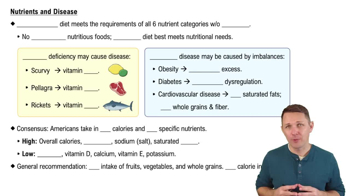
 06:17
06:17