Skip to main content
Nutrition
나의 코스
배우기
시험 준비
AI 튜터
학습 가이드
플래시카드
앱을 사용해 보세요
나의 코스
배우기
시험 준비
AI 튜터
학습 가이드
플래시카드
앱을 사용해 보세요
뒤로
Nutrition For Young Children (Ages 1-5) quiz
카드를 뒤집기 위해 탭할 수 있습니다.
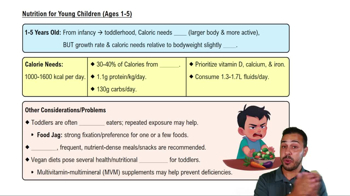
What is the recommended daily caloric intake range for children ages 1-5?
카드를 뒤집기 위해 탭할 수 있습니다.
👆
What is the recommended daily caloric intake range for children ages 1-5?
Children ages 1-5 should consume between 1,000 and 1,600 kilocalories per day, depending on factors like physical activity.
진행 상황 추적
컨트롤 버튼이 '내비게이션' 모드로 변경되었습니다.
1/15
관련 플래시카드
관련 실천
추천 영상
Nutrition For Young Children (Ages 1-5) definitions
Nutrition For Young Children (Ages 1-5)
15 용어
Nutrition For Young Children (Ages 1-5)
15. Nutrition: Toddlers to Late Adulthood
10 문제점
주제
Nutrition For School-Age Children (Ages 6-11)
15. Nutrition: Toddlers to Late Adulthood
10 문제점
주제
15. Nutrition: Toddlers to Late Adulthood
4 주제
15 문제점
장
VideoThumbView.guidedCourse
01:50
Nutrition For Young Children (Ages 1-5) Example 1
88
views
2
rank
03:26
Nutrition For Young Children (Ages 1-5)
119
views
3
rank
이 집합의 용어 (15)
하이드의 정의
What is the recommended daily caloric intake range for children ages 1-5?
Children ages 1-5 should consume between 1,000 and 1,600 kilocalories per day, depending on factors like physical activity.
What percentage of daily calories should come from fat for young children?
30–40% of daily calories should come from fat for children ages 1-5.
Why is whole milk recommended over low-fat milk for young children?
Whole milk is recommended because young children need a higher percentage of calories from fat to support growth and development.
What is the protein requirement for children ages 1-5?
Children in this age group need 1.1 grams of protein per kilogram of body weight per day.
How many grams of carbohydrates should children ages 1-5 consume daily?
They should consume 130 grams of carbohydrates per day.
Which three micronutrients are of particular concern for young children?
Vitamin D, calcium, and iron are key micronutrients to prioritize for children ages 1-5.
What is the recommended daily fluid intake for children ages 1-5?
Children in this age group should consume between 1.3 and 1.7 liters of fluids daily.
What is a common eating behavior in toddlers that involves rejecting certain foods?
Toddlers often exhibit picky eating, where they reject and exclude various healthy foods.
How can parents help reduce picky eating in young children?
Repeated exposure to healthy foods, 8–15 times, can help reduce picky eating.
What are food jags and how long do they typically last?
Food jags are strong fixations on one or a few foods, usually lasting a few days or weeks.
When should parents seek professional help regarding food jags?
If a food jag lasts longer than a few weeks, parents should consult a healthcare professional.
How should meals and snacks be structured for young children?
Children ages 1-5 should have small, frequent, nutrient-dense meals and snacks rather than three large meals.
What are the risks of a vegan diet for young children?
Vegan diets can pose health and nutritional risks for toddlers if not carefully planned.
What is commonly recommended to prevent deficiencies in children on vegan diets?
Multivitamin-mineral (MVM) supplements are often recommended to help prevent deficiencies.
Why do caloric needs per kilogram decrease as children transition from infancy to toddlerhood?
Caloric needs per kilogram decrease because the growth rate slows down after infancy, even though overall caloric needs increase.
 뒤로뒤로
뒤로뒤로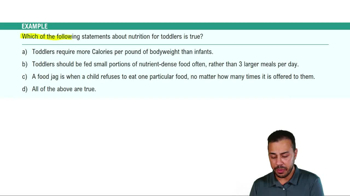
 01:50
01:50