Skip to main content
Nutrition
나의 코스
배우기
시험 준비
AI 튜터
학습 가이드
플래시카드
앱을 사용해 보세요
나의 코스
배우기
시험 준비
AI 튜터
학습 가이드
플래시카드
앱을 사용해 보세요
뒤로
Osteoporosis: Minerals and Bone Health exam
카드를 뒤집기 위해 탭할 수 있습니다.
What is osteoporosis?
카드를 뒤집기 위해 탭할 수 있습니다.
👆
What is osteoporosis?
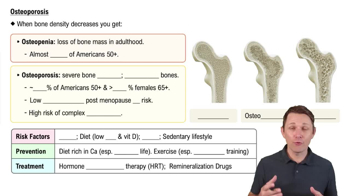
A condition characterized by decreased bone mineral density, leading to fragile bones and increased fracture risk.
진행 상황 추적
컨트롤 버튼이 '내비게이션' 모드로 변경되었습니다.
1/30
관련 플래시카드
관련 실천
추천 영상
Osteoporosis: Minerals and Bone Health definitions
Osteoporosis: Minerals and Bone Health
15 용어
Osteoporosis: Minerals and Bone Health quiz
Osteoporosis: Minerals and Bone Health
15 용어
Osteoporosis: Minerals and Bone Health
8. Water and Minerals
10 문제점
주제
Major Mineral: Chloride, Magnesium, & Sulfur
8. Water and Minerals
10 문제점
주제
8. Water and Minerals
10 주제
15 문제점
장
03:54
Bone Health
188
views
3
rank
04:29
Osteoporosis
149
views
2
rank
이 집합의 용어 (30)
하이드의 정의
What is osteoporosis?
A condition characterized by decreased bone mineral density, leading to fragile bones and increased fracture risk.
Cortical bone
The dense, solid outer layer of bone, also called compact bone.
What is the function of osteoclasts?
Osteoclasts dissolve or reabsorb old bone during bone remodeling.
Trabecular bone
The inner, spongy bone with many spaces, providing strength and housing bone marrow.
What is bone remodeling?
The process by which old bone is dissolved and new bone is deposited.
Osteopenia
A condition marked by loss of bone mass in adulthood, often preceding osteoporosis.
What mineral is most important for bone health?
Calcium is the most important mineral for bone health.
Osteoblasts
Cells that deposit new bone during bone remodeling.
What is the main risk associated with osteoporosis?
An increased risk of fractures, especially complex fractures.
Hydroxyapatite
The mineral complex of calcium and phosphorus that gives bone its hardness.
What is the role of vitamin D in bone health?
Vitamin D helps the body absorb calcium, which is essential for bone health.
How often is the human skeleton completely replaced?
About every ten years.
What is a complex fracture?
A fracture where the bone breaks in multiple places and is harder to heal.
What are two main types of bone tissue?
Cortical (compact) bone and trabecular (spongy) bone.
What is the effect of estrogen on bone health?
Estrogen helps maintain bone density; low estrogen after menopause increases osteoporosis risk.
What lifestyle factor increases osteoporosis risk?
A sedentary lifestyle increases the risk of osteoporosis.
What is the prevalence of osteopenia in Americans over 50?
About 50% of Americans over 50 have osteopenia.
What is the prevalence of osteoporosis in Americans over 50?
About 18% of Americans over 50 have osteoporosis.
What is the best time in life to build bone mass?
During childhood and early adulthood.
What type of exercise is best for bone health?
Resistance or weight training exercises.
What is hormone replacement therapy used for in osteoporosis?
It helps maintain bone density in postmenopausal women.
What is the difference between osteopenia and osteoporosis?
Osteopenia is mild bone loss; osteoporosis is severe bone loss with fragile bones.
Which sex is at higher risk for osteoporosis?
Females, especially postmenopausal women.
What nutrients are most important for preventing osteoporosis?
Calcium and vitamin D.
What is the main structural difference in osteoporotic bone?
Larger spaces and fewer bone struts in trabecular bone.
What is the role of bone marrow?
Bone marrow fills the spaces in trabecular bone and produces blood cells.
What happens to bone remodeling with age?
Bone resorption outpaces bone deposition, leading to bone loss.
What drugs can help treat osteoporosis?
Medications that aid in bone remineralization.
Why is early-life nutrition important for bone health?
Building strong bones early provides a higher bone mass baseline for later life.
What is the main component of bone mineral?
Hydroxyapatite, composed of calcium and phosphorus.
 뒤로뒤로
뒤로뒤로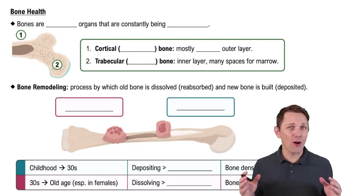
 03:54
03:54