Skip to main content
Nutrition
나의 코스
배우기
시험 준비
AI 튜터
학습 가이드
플래시카드
앱을 사용해 보세요
나의 코스
배우기
시험 준비
AI 튜터
학습 가이드
플래시카드
앱을 사용해 보세요
뒤로
Protein Digestion exam
카드를 뒤집기 위해 탭할 수 있습니다.
Where does most protein digestion occur?
카드를 뒤집기 위해 탭할 수 있습니다.
👆
Where does most protein digestion occur?
In the stomach and small intestine.
진행 상황 추적
컨트롤 버튼이 '내비게이션' 모드로 변경되었습니다.
1/28
관련 플래시카드
관련 실천
추천 영상
Protein Digestion definitions
Protein Digestion
15 용어
Protein Digestion quiz
Protein Digestion
15 용어
Protein Digestion
6. Proteins
10 문제점
주제
Dietary Guidelines for Proteins
6. Proteins
10 문제점
주제
6. Proteins
7 주제
15 문제점
장
VideoThumbView.guidedCourse
02:49
Protein Digestion
256
views
2
rank
VideoThumbView.guidedCourse
02:58
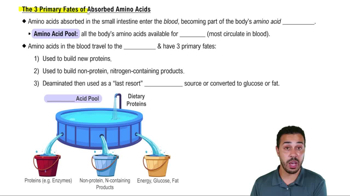
The 3 Primary Fates of Absorbed Amino Acids
205
views
2
rank
VideoThumbView.guidedCourse
03:44
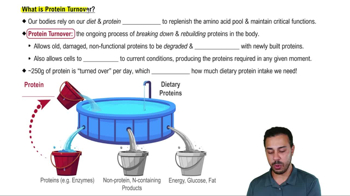
What is Protein Turnover?
220
views
1
rank
이 집합의 용어 (28)
하이드의 정의
Where does most protein digestion occur?
In the stomach and small intestine.
Pepsin
A protease enzyme in the stomach that breaks down denatured proteins into peptides.
What is the primary goal of protein digestion?
To break dietary proteins into single amino acids for absorption.
Amino Acid Pool
All of the body's amino acids that are readily available for use.
What role does stomach acid play in protein digestion?
It denatures proteins and activates pepsin.
Protein Turnover
The ongoing process of breaking down and rebuilding proteins in the body.
Are proteins chemically digested in the mouth?
No, only mechanical digestion occurs in the mouth for proteins.
Pancreatic Proteases
Enzymes from the pancreas that further digest peptides in the small intestine.
What happens to peptides in the small intestine?
They are broken down into dipeptides, tripeptides, and amino acids.
Dipeptidases and Tripeptidases
Enzymes in enterocytes that break dipeptides and tripeptides into single amino acids.
What are the three primary fates of absorbed amino acids?
Used to build new proteins, make nitrogen-containing compounds, or be deaminated for energy.
Deamination
The removal of the amine group from an amino acid, allowing it to be used for energy.
How are amino acids absorbed?
As single amino acids through the small intestine into the bloodstream.
What is the effect of protein turnover on dietary protein needs?
It reduces the amount of dietary protein required.
Protease
An enzyme that breaks down proteins into smaller peptides or amino acids.
What activates pepsinogen in the stomach?
Stomach hydrochloric acid (HCl).
Mechanical Digestion of Protein
Chewing in the mouth that physically breaks down protein food.
What is the function of the amino acid pool?
To supply amino acids for protein synthesis and other metabolic needs.
Non-protein Nitrogen Compounds
Molecules like some hormones that contain nitrogen but are not proteins.
What happens to old or damaged proteins in the body?
They are degraded and their amino acids are recycled through protein turnover.
Enterocytes
Cells lining the small intestine that absorb amino acids and contain peptidases.
What is the significance of protein turnover for cellular adaptation?
It allows cells to quickly degrade unneeded proteins and synthesize new ones as needed.
Peptide
A short chain of amino acids linked by peptide bonds.
How do dietary proteins contribute to the amino acid pool?
By being digested and absorbed as amino acids into the bloodstream.
Hydrochloric Acid (HCl)
Stomach acid that denatures proteins and activates pepsinogen.
What is the fate of amino acids not used for protein synthesis?
They may be used to make nitrogen compounds or be deaminated for energy or converted to glucose/fat.
Why is protein digestion necessary?
Because only single amino acids can be absorbed and used by the body.
What is the estimated amount of protein turned over daily in the body?
About 250 grams per day.
 뒤로뒤로
뒤로뒤로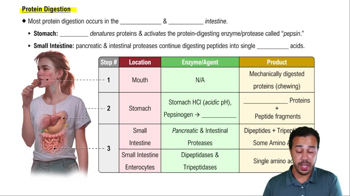
 02:49
02:49