Nutrition
나의 코스
배우기
시험 준비
AI 튜터
학습 가이드
플래시카드
앱을 사용해 보세요
나의 코스
배우기
시험 준비
AI 튜터
학습 가이드
플래시카드
앱을 사용해 보세요
뒤로
Protein-Related Disorders quiz
카드를 뒤집기 위해 탭할 수 있습니다.
What is the recommended Acceptable Macronutrient Distribution Range (AMDR) for protein intake as a percentage of total daily calories?
카드를 뒤집기 위해 탭할 수 있습니다.
👆
What is the recommended Acceptable Macronutrient Distribution Range (AMDR) for protein intake as a percentage of total daily calories?
The AMDR for protein is 10-35% of total daily calories.
진행 상황 추적
컨트롤 버튼이 '내비게이션' 모드로 변경되었습니다.
1/15
관련 플래시카드
관련 실천
추천 영상
Protein-Related Disorders definitions
Protein-Related Disorders
15 용어
Protein-Related Disorders exam
Protein-Related Disorders
26 용어
Protein-Related Disorders
6. Proteins
10 문제점
주제
Dietary Guidelines for Proteins
6. Proteins
10 문제점
주제
6. Proteins
7 주제
15 문제점
장
04:26
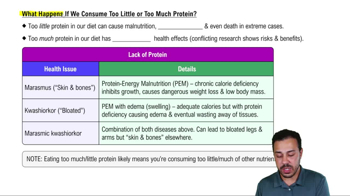
What Happens if We Consume Too Little or Too Much Proteins?
163
views
2
rank
이 집합의 용어 (15)
하이드의 정의
What is the recommended Acceptable Macronutrient Distribution Range (AMDR) for protein intake as a percentage of total daily calories?
The AMDR for protein is 10-35% of total daily calories.
What is protein-energy malnutrition (PEM)?
PEM is a condition resulting from inadequate intake of protein and/or calories, leading to malnutrition.
What are the main characteristics of marasmus?
Marasmus is characterized by severe weight loss, stunted growth, and a skin-and-bones appearance due to chronic calorie and protein deficiency.
What causes marasmus?
Marasmus is caused by a chronic deficiency of both calories and protein.
How does kwashiorkor differ from marasmus in terms of calorie intake?
Kwashiorkor occurs with adequate calorie intake but insufficient protein, while marasmus involves a deficiency of both calories and protein.
What physical symptoms are commonly seen in kwashiorkor?
Kwashiorkor is characterized by edema (swelling), especially in the face, abdomen, arms, and legs, and tissue wasting.
Why does kwashiorkor cause edema or swelling?
Kwashiorkor causes edema because protein deficiency disrupts fluid balance in the body, leading to fluid buildup in tissues.
What is marasmic kwashiorkor?
Marasmic kwashiorkor is a combination of marasmus and kwashiorkor, showing both severe wasting and edema.
Which populations are most at risk for protein-related disorders like marasmus and kwashiorkor?
Young infants and children in resource-poor regions are most at risk for these disorders.
What is the appearance of someone with marasmus?
A person with marasmus appears extremely thin with a skin-and-bones look.
What is the appearance of someone with kwashiorkor?
A person with kwashiorkor often has a bloated or puffy appearance in certain body regions due to edema.
What can happen if protein intake is consistently outside the AMDR?
Consistently low protein intake can cause malnutrition and disease, while the effects of high protein intake are unclear and still being researched.
Why is it important to consume protein within the recommended guidelines?
Staying within the guidelines helps prevent protein deficiency and ensures balanced intake of other nutrients.
What is a potential consequence of eating too much or too little protein regarding other nutrients?
It likely means you are consuming too little or too much of other nutrients, which can negatively affect health.
What is the main focus of research regarding excessive protein intake?
The health effects of excessive protein intake are unclear, with conflicting research showing both risks and benefits.