Skip to main content
Nutrition
나의 코스
배우기
시험 준비
AI 튜터
학습 가이드
플래시카드
앱을 사용해 보세요
나의 코스
배우기
시험 준비
AI 튜터
학습 가이드
플래시카드
앱을 사용해 보세요
뒤로
Simple vs Complex Carbohydrates definitions
카드를 뒤집기 위해 탭할 수 있습니다.
Monosaccharide
카드를 뒤집기 위해 탭할 수 있습니다.
👆
Monosaccharide
Single sugar unit serving as a basic building block for larger carbohydrates and a primary energy source for cells.
진행 상황 추적
컨트롤 버튼이 '내비게이션' 모드로 변경되었습니다.
1/15
관련 플래시카드
관련 실천
추천 영상
Simple vs Complex Carbohydrates quiz
Simple vs Complex Carbohydrates
15 용어
Simple vs Complex Carbohydrates exam
Simple vs Complex Carbohydrates
29 용어
Simple vs Complex Carbohydrates
4. Carbohydrates
10 문제점
주제
Why Do We Need Carbohydrates?
4. Carbohydrates
10 문제점
주제
4. Carbohydrates
9 주제
15 문제점
장
VideoThumbView.guidedCourse
02:26
Simple vs Complex Carbohydrates Example 2
299
views
4
rank
VideoThumbView.guidedCourse
03:28
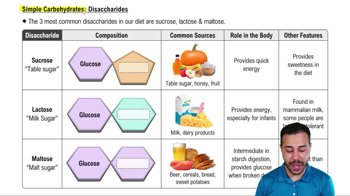
Simple Carbohydrates: Disaccharides
325
views
8
rank
VideoThumbView.guidedCourse
03:54
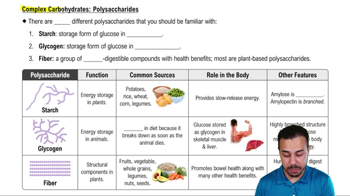
Complex Carbohydrates: Polysaccharides
373
views
8
rank
이 집합의 용어 (15)
하이드의 정의
Monosaccharide
Single sugar unit serving as a basic building block for larger carbohydrates and a primary energy source for cells.
Disaccharide
Carbohydrate composed of two linked monosaccharides, providing quick energy and sweetness in the diet.
Polysaccharide
Large carbohydrate made of many monosaccharides, functioning in energy storage or as structural components.
Glucose
Primary energy source for most cells, found in fruits, honey, and starch-rich foods; essential for cellular respiration.
Fructose
Sweetest natural sugar, commonly found in fruits and honey, often converted to glucose or fat in the liver.
Galactose
Sugar present in dairy products, usually consumed as part of lactose and converted to glucose or fat in the liver.
Sucrose
Common table sugar made of glucose and fructose, providing quick energy and significant sweetness.
Lactose
Milk sugar composed of glucose and galactose, found in dairy products and essential for infant nutrition.
Maltose
Sugar formed from two glucose units, present in beer and starchy foods, and produced during starch digestion.
Starch
Plant-based polysaccharide storing glucose, providing slow-release energy; includes amylose and amylopectin forms.
Glycogen
Highly branched polysaccharide storing glucose in animals, mainly in liver and muscle, enabling rapid energy release.
Fiber
Nondigestible plant polysaccharide promoting digestive health; humans lack enzymes to break it down.
Amylose
Linear form of starch, consisting of unbranched chains of glucose units found in plant energy storage.
Amylopectin
Branched form of starch, allowing for more rapid glucose release compared to linear starch.
Cellular Respiration
Process in which cells extract energy from glucose, supporting vital cellular activities.
 뒤로뒤로
뒤로뒤로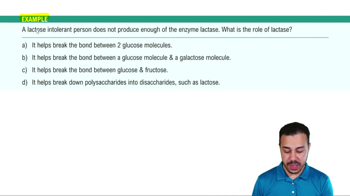
 02:26
02:26